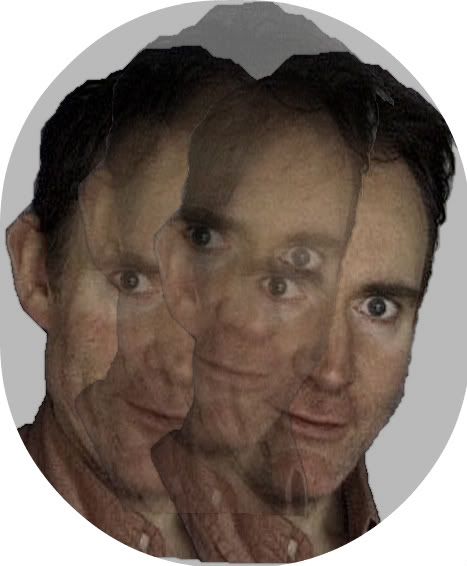
Here am I in my little websit with England struggling to maintain its veneer of economic and social calm, the country's fifth largest mortgage lender Northern Rock having been bailed out by the Bank of England. I can't even get my Housing Association and its contractors to finalise basic plumbing to my flat without the rumblings of war shaking my soul asunder. A microcosm of England today? Northern Rock savers showed little faith in government assurances and withdrew over £2 billion in a few days. Given the government's broken promises over the years (remember the pension fund debacle?) it was hardly surprising. And in fairness to Northern Rock, it did only what everyone else in the country had been doing all along. Northern Rock just gambled with higher stakes by borrowing heavily (75%) from wholesale markets (i.e. other banks). (Channel Four news as always, had the most incisive coverage). In his Brighton conference speech, Liberal Democrat leader Sir Menzies Campbell chastised the government for, among many other things, allowing personal debt in the UK to reach £1.3 trillion. Spend, spend, spend on the good ship Rule Britannia and hope global warming melts those icebergs!
Housing boom near end (FT)
I had a jovial chat with iceberg voyeur architect Will Alsop the other night "by 31 you give up on ideas, by 41 you give up on opinions, and by 51 you give up on notions". Well anyway, that was the gist after some vino. His archi-sit at Chelsea Space evokes his new hotel project honed from the trees and earth of Malaga and far away from any icebergs. Mandatory transport will be by mule. A business partner of Alsop's chastised me for my notion of dubious freedom of speech in Britain. I guess I'm neither 51 nor even 41. I'm sure the daily freedom of anyone connected with Dispatches docos is undoubtedly unquestionable. Particularly the recent one on the finances of London's 2012 Olympics by Anthony Barnett. Another martini anyone? Shaken or stirred? And again, in fairness to Lord Coe (the former athlete and spearheader of the Games), his personal capitalisation on the back of his Olympic job is no different to what anyone else is doing in the country either. Only, his is on the back of public money. I'd stick to hedge funds if I were he. Documents obtained under the Freedom of Information Act by Dispatches revealed a 2004 KPMG report stating that there was a 30-40% budget shortfall. Currently a £1 billion budget shortfall (three times the original costs). I'm sure Northern Rock savers would be only too glad to assist :) There was also an amazing, inspiring and quite depressing doco (not Dispatches) about Morgan Stanley chief of security at the World Trade Centre Rick Rescorla The Man Who Predicted 9/11. Probably one of the eeriest 'I told you so' stories in history.
A strange and interesting take on the German financial psyche is Yella, written and directed by Christian Petzold. On the surface it resembles social realism, but in essence is more like a ghost ship leering out of the fog at the jolly Rule Britannia. Yella (Nina Hoss) leaves her dad and small eastern German town for job prospects in Hanover. A car accident with her obsessive ex-husband time warps the film whence an ousted exec Philipp (Devid Striesow) takes on Yella as his assistant in venture capital. The feeling of sehnsucht (longing) pervades this film and director Petzold states his interest in ghost towns and people "who have wanted a little too much and who are now on the outside...no longer belonging...of American ballads that convey being on the road."
We must look at 'root causes' of gun crime
Westerns and the 'way of the gun' have certainly stood out from the pack the last week or so in film and DVD. Aside from the rise of London gun crime, of course. (Worth checking out Dogwoof's release of Tough Enough, the debut film of German actor Detlev Buck, for his perceptive take on Berlin mean streets and their effect on a 15-year-old.) Optimum has four Western Classics Vol.2 and three Sam Fuller Classics. The breathtaking widescreen Fuller prints are the same as those for the US Fox releases though House of Bamboo (1955) has an audio commentary on the US version. Otherwise Optimum's only extras (budget price) are trailers that prove just how dullish the prints were before restoration. Bamboo concerns a gang of ex-American GI's in Tokyo infiltrated by undercover ex-army officer Eddie Kenner (Robert Stack). If the design and colour palette resemble Godard's Pierrot le Fou (1965), that's because Fuller was one of the French auteur's heroes, even casting Fuller as himself in Pierrot. Fuller's cold war Hell and High Water (1954) has ex-Navy officer 'gun for hire' Richard Widmark transporting a nuclear scientist to Alaska in his submarine. He's investigating goings-on by the Ruskies and it's all in stunning Cinemascope with the swirling 'Wagnerian' strings of legendary composer Alfred Newman. Fuller's earlier low-budget B/W Fixed Bayonets (1951) is his second Korean War movie. The new US Criterion set has Steel Helmut (1950).
I'm not really a Westerns kinda guy, but I do like my Sam Peckinpah and throughout his career he never faltered from his character driven stories first delivered in Deadly Companions (1961). A brilliant almost 'contemporary music' score by Marlin Skiles (bandoneon [accordion] and guitar) opens with a melancholic ditty sung by Maureen O'Hara over the title credits and another beautiful widescreen print (William H. Clothier, cinematography). Essentially it's a two hander with Yellowleg (Brian Keith) escorting Maureen O'Hara's Kit through Apache territory. He's atoning for his accidental murder of her 9 year-old son in a bank robbery who she wants to bury beside her husband. It's almost the Western equivalent of Italian neo-realism. The others in the Western Classics set cover more familiar ground by other outstanding directors. Seminole (1953) is by the only recently re-discovered Budd Boetticher, whose fans have included Martin Scorsese. There's also another restored widescreen treat in Nicholas Ray's The True Story of Jesse James (1957) with Robert Wagner as Jesse. James Mangold's film out last week 3.10 to Yuma (a re-make of the 1957 Glenn Ford pic based on Elmore Leonard and just out on US DVD) fares pretty well agin these classics. But from a director, who made the highly original character-probing Heavy as his debut back in 1995, one expected a bit more Sam Peckinpah soul in his 3.10.
John Ford Collection on Fox DVD Oct 1
Region 1 DVD release of Ford at Fox on 4th December 2007, 24 films – 18 of which are new to R1 DVD.
No soul in Shoot 'Em Up, but Michael Davis' writer/director debut is a tour de force of scripting wit and originality. I loved every minute. Who couldn't with a 'What's up doc?' carrot munching Clive Owen outshooting Paul Giamatti's unfit bad guy to save bellissima Monica Bellucci and a baby (ricochets of Jean Reno in Luc Besson's Leon) all in under 90 minutes? More laughs with Hollywood new kid on the block, although he's probably been writing and eating Chinese for years in his dorm, Judd Apatow this week. I may not have raved about last week's Knocked Up but Superbad, produced by Apatow and directed by Greg Mottola isn't the filthy fun of John Waters, but it'll do very nicely in his absence. For a multiplex audience, there's a wealth of emotional subtlety here amidst the 'American Pie' jokes, and the adult cops are nicely characterised rather than just characatured.
To say Quentin Tarantino made a flop with Deathproof (bombed in the States) is like saying the Pope forgot his catechism. Like Scorsese, Tarantino hommages film history and if he persuades our curiosity to check out his sources, that can be no bad thing. Though many will question whether these sources are worth a braincell at all. In the first half of Deathproof he even post-effects the film to look like the original 70's American exploitation pics as seen in a divey 90's cinema, complete with scratches on the print, jumpy film frames and wonky colours. Kurt Russell is the smarmy, scarred and mean Stuntman Mike who finally squeals like a baby when womanhood get their comeuppance on his bloody antics. But when the Grindhouse double-bill with Robert Rodriguez's Planet Terror flopped stateside, Tarantino simply rose from the ashes and just added some more to his part for the European release. As always, a great soundtrack.
Don't miss the 15th RAINDANCE FILM FESTIVAL trailer (or indeed the festival-starts Wednesday) directed by Kasimir Burgess and Edwin McGill (Australia) about a dirt poor cineaste scraping pennies together to make his 'Lone Rider' western. Their brilliantly quirky short last year Booth Story, about an underground parking attendant adopting an unclaimed egg and the duckling within, won the Diesel sponsored prize to make the trailer.
And what of the much-publicised Brit hope Atonement - wars of the emotions set against the Second World War? I haven't read Ian McEwan's source novel but the film's tone and structure seem reminiscent of Losey's Brit class classics Accident (1967) and The Go-Between (1970) with Harold Pinter script adapting. Atonement screenwriter Christopher Hampton has done a fine job I'm sure, but it's not an easy film from which a viewer gains much lasting cinematic weight. Vanessa Redgrave, as always, pierces the screen with her reflective gaze as the ageing Briony interviewed about her novel. But Briony's heinous lie that destroyed the lives of Cecilia (Keira Knightley) and Robbie (James McAvoy) has no atonement for the viewer of Joe Wright's film. Impressive elements all round though particularly from Dario Marianelli's score that avoids the usual battleground bathos of Dunkirk fashioning more of a war requiem from the on screen sounds.
Vanessa Redgrave turns in another great performance in Lajos Koltai's Evening as the dying mother Ann Lord remembering the life and loves of her youth in Newport, Rhode Island one summer weekend wedding 50 years ago. Some of the film's publicity, a little misleadingly, suggests that Evening is based on material by Pulitzer Prize winner Michael Cunningham (The Hours) when in fact he's the co-scriptwriter with author Susan Minot of her novel. Koltai is a former cinematography and his use of widescreen in Evening is truly breathless and together with a faultless cast and production team (A-list New York indie) you won't be disappointed. But the story is wafer thin aside these elements. The Harris of the story's 'who was Harris?' just isn't that interesting, though through no fault of Patrick Wilson's Harris. I was more curious about the other bloke, the drunken Buddy (Hugh Dancy). But maybe that's the point, as Redgrave's Ann says finally "we are mysterious characters and at the end none of it turns out to really matter."
Thai director Apichatpong Weerasethakul (calls himself Joe for ease) gives us the echt Zen effect with Syndromes and a Century. Commissioned as part of the Mozart 250th birth fest New Crowned Hope, this is not an easy film to latch onto to and I certainly felt this the first time I saw it at last year's Times BFI London Film Festival. What's Mozart got to do with it, do with it, you ask? But this is definitely not a second hand emotion when it comes to the Fest films commissioned in Herr. M's honour. I'd been unpleasantly screwed by London transport prior to my second viewing and I emerged refreshed and revitalised from Syndromes. Because of the slow pace and an unrelenting camera almost tripodded with only a few panning shots and sticking to a 35mm lens, the film seems far longer than its 105 minutes. But that's the Zen. Set in a hospital it's basically a love story, quietly and subtly comedic, about the way in which people fall in love. A doctor in her basement office keeps a bottle of stiff beverage in an artificial limb and there's a singing dentist. "I'm interested in the way things change over time, and in the ways they don't change. It seems to me that human affairs remain fairly constant," says Weerasethakul. Let his film envelop you and you'll be richly rewarded, or at the very least, allow you to breathe a little more easily than when you entered the cinema.
Apichatpong Weerasethakul BFI retrospective
And if "Joe" doesn't do it for you then David Lynch might be the answer. His Inland Empire is recently out on DVD, three hours of low res digital video (Sony PD 150, the one used for the dance sequences in Lars von Trier's Dancer in the Dark) with 40-minute takes! There's an extras disc with five interviews; nothing new if you're a Lynch fan but always fascinating and a must have. Mike Figgis interviews Lynch at a cinematographer's fest in Lodz, Poland, Lynch walks biographer Michel Chion through his art exhibition this year at the Fondation Cartier in Paris, and there are extracts from the NFT Guardian interview with his fingers conducting his speech like sea anemones. Lynch is a long-time convert of transcendental meditation "a mental teaching that allows any human being to dive within and experience bliss...experience an unbounded ocean of consciousness...modern science's unified field [the origin of all things]". As one interviewer asks "if TM creates positiveness, what about all the darkness that's in the films?" Sehnsucht..seligkeit...
Saturday, 22 September 2007

Friday, 7 September 2007
Our whispered rainbow
Almost a haiku
A marmalade wink a honey smile
Eggs umbrellas of tears
Our whispered rainbow always worn.
for my remarkable Mother (8/1/1927-2/9/2007)
"Men everywhere have vied for her heart since the beginning of time. From our ancestor Adam, right up to Adam Smith [The Wealth of Nations]...Everyone thinks their version is the [true story]." So begins Garin Nugroho's Opera Jawa from Indonesia- the village elders able to read everyone's fate in a pig's liver. Inspired by the story from the epic Sanskrit poem Ramayana, the film is sung in Javanese gamelan style throughout and propelled by raw, beautiful choreography - think of impassioned Martha Graham dance but much slower. Commissioned as one of Peter Sellars' New Crowned Hope Festival films marking Mozart's 250th birth anniversary, it's the story of Dewi Sinta, a beautiful girl who marries a potter but is tempted by a malevolent male butcher. Every scene looks absolutely amazing (shot in only 2 weeks!) and some almost surreal as in the Edward Hopper bar room with flamenco dancing to the Javanese equivalent of legendary freedom folk guitarist Robert Johnson. Dewi Sinta's story is at heart a parable about the innocent earth being ravaged by the evils of mankind.
Lady Chatterley, a French adaptation of a DH Lawrence story by Pascale Ferran, does a pretty good job of evoking Lawrence's erotic blend of Mother Nature and sexual desire. Lady of the manor Constance Chatterley (Marina Hands) discovers their gamekeeper Parkin (Jean-Louis Coulloc'h) at the bottom of her garden, so to speak, and for the next three hours of cinema has her jonquils tended to. Does the film itself need pruning? Well, distributor Artificial Eye, whose normal haunt is the art house circuit, tried a wider release here. And seeing this picture on a huge Cineplex screen does hold your interest. There's little chemistry between Chatterley and Parkin apart from the obvious but that's also the point of the film. Coulloc'h has none of the swashbuckling machismo of an Oliver Reed or Alan Bates but he is very simple, strong and earthy for Marina Hands' peahen. And thankfully there's very little music score to guild their passion.
Small DVD outfit Bluebell (no website) gives us more French passion. Camille (Karin Viard) is no peahen more skewer bird as she seeks her male sustenance in Paris. After many one-night stands, she encounters married Socialist Party organiser Alexis (Pierre-Loup Rajot) and keeps after him. Catherine Corsini's La Nouvelle Eve (The New Eve - 1999) is another of producer Paulo Branco's soulful character studies with absolutely no music (except for the parties) to distract you from the performances. With understated cinematography from genius Agnès Godard, it's not an art house shattering experience by any means, but nor does it set out to be.
Last month, Bluebell DVD also re-issued Pascal Bonitzer's Rien sur Robert and Christopher Frank's Love in the Strangest Way. The latter is a decent French femme fatale revenge thriller in which Nadia Fares worms her way into Thierry L'Hermitte's happy family life and his affections to wreck havoc. Rien sur Robert (Nothing on Robert) has a number of neurotic women upsetting the world of mid-life film journalist Didier (Fabrice Luchini). His young girlfriend Juliette (Sandrine Kiberlain) says she loves only him while openly sleeping with another. Didier is thence drawn into the web of the very cute but neurotic Valentina Cervi. It's all a bit French but very watchable.
Another Bluebell (all are mid-price, no extras) is Korean director Jae-eun Jeong's Take Care of My Cat about five former schoolfriends trying to find excitement in the lifeless port of Inchon. The cat in question is 'tee-tee' a birthday present for Ji-young who lives in a shanty home where the roof always threatens to collapse and finally does. Hee-joo, meanwhile, left to work in Seoul's financial services. This isn't a surprising script but it's a charmingly observed one.
The friendship in Joachim Trier's Norwegian Reprise (out in cinemas this week) is a 'what if' scenario. My Norwegian grammar stops at the echoing past of the noun fjord so I'm not quite sure of the correct tense, but it's a good trivia question to ask how many films begin with 'He would have done x, if y had had that'. Reprise begins with this past conditional and 23-year-old friends Erik (Espen Kloumann Høiner) and Philip (Anders Danielsen Lie), novelists both posting off their initial opus. Their milieu is Oslo Bataille/Barthes reading bourgeois youth but their creativity is the existentialism of a novel like Knut Hamsun's Hunger (1899) about a starving young writer. Like Hunger, Reprise is less concerned about milieu and more about the growth of soul and self. I first saw Reprise at last year's London Film Festival and was a touch perplexed by the narrative. On a recent second viewing you realise that that's exactly the point. There's a taste of Godard rustled up by Olivier Bugge Coutte's editing and indeed, Philip's girlfriend Kari (Victoria Winge) has the captivating screen presence of Godard's muse Anna Karina. Both Philip and Kari love The Ramones and dislike The Clash. There's also a subtle bitter flavour of Hamsun's Nazi sympathies in the mix. This is a very impressive debut for director and co-writer Joachim Trier. And it's the third and equally impressive release from new Brit indie distributor Diffusion. Trier's also a Norwegian skateboard champion and distant relative of Lars von Trier.
Is Col Spector's Brit debut film Someone Else existential or just plain solipsistic? Set in London, thirtysomething photographer David (Stephen Mangan) ditches loyal gal Lisa (Susan Lynch) for dipsy Nina (Lara Belmont) and finds that he can't go back and reprise or even appease Lisa. And would you really trust a guy who thought you liked Jethro Tull? Lisa didn't. Though Spector's co-written dialogue is very sharp and witty, the story ain't much. And it's a film easy to dismiss because of the latter. Interestingly, Spector signed up to RSA Films as a commercials director but the film is almost entirely filmed in mid-shot without any camera choreographic antics. Given the film's short 78 minutes it leads you to think that Spector knows exactly what he wants and that he's conveying that sense of observed urban alienation, particularly a London one, where everybody appears to be happy in the bars and dinner parties but in reality just isn't. Mangan hasn't got that Clive Owen lone prowler's face, more a hangdog likability that gets adopted from the cold and curls up at the foot of a female's bed. And the performances Spector elicits from the rest of his actors are uniformly first-rate. I wish he'd not used music at the end,though,instead of just letting the images speak for themselves.
Helping to lure or keep your significant other half, The Speciality and Fine Food Fair this week in London had some tantalising hand-made morsels from young independent companies. The Wicked Fruit Company has a great logo, hot chilli chocs and some very fetching new lavender ones. A young, seductive Frenchman in Brighton started The Chocolate Empire two years ago and has wondrous choc concoctions. Last year it was dark choc basil, this year poor relation white chocolate leapt forward with subtle lemongrass and poppy seed, cranberries and ylang ylang. Some alluring and very knowledgeable girls from Raw Intent sung a mermaid's song to woo me away from red meat and into their healthier chocolate cove of Aphrodesia Luxury Chocolate spread, ancient Taoist and Tibetan longevity wolfberries, and their range of superfood powders including protein punch. Their luxury raw chocolate pie is so good you only need tiny portions to partake in Raw Intent's siren song that definitely wont send you to your death. The husband and wife team of The Perfectly Delicious Company quit their city finance jobs and after a year now produce handmade natural biscuits that they sell back to the boardrooms they once sat in. Now that's what I call jammy job satisfaction.
Interesting also to chat to the coffee roasters around the issues of Fairtrade products. Unbeknownst to most people, just because your coffee doesn't have a Fairtrade label doesn't mean the farmers aren't necessarily getting a fair deal as the man from the wonderfully named Grumpy Mule pointed out. The same goes for Union Hand Roasted. But you do have to do your homework and find companies you can trust. The coffee exploitation debate was well promulgated in the recent doco Black Gold helping enormously to raise awareness. For Fairtrade spices try Steenbergs Organic, the first UK business to introduce Fairtrade spices and this year they have a fully certified Vanilla essence.
And if all that healthy eating has got you into planet-saving mode, you could try adopting an olive tree in Italy from Nudo, a company set up by an ex-TV producer Brit couple. For £65 a year you not only get your tree but all its produce which, when you do your math, is a really good deal. 970 of their 1200 trees have so far been adopted. It's such a good idea that Selfridges included an adoption in each of their Christmas hampers last year.
If you needed to give your alien friend from another galaxy, or indeed a non-Brit, an educational Christmas present on contemporary British life, this week has your answer. Sixteen Films have two volumes of Ken Loach, Optimum has its Shane Meadows set (with their usual copious extras) giving a Northern perspective, and Fabulous Films have Mike Leigh's High Hopes set in London. I haven't been able to view the DVD's but these films are all fantastic and many of them quite funny, albeit bleakly. BBC TV screens its last episode in their splendid British Film Forever series tonight Comedy. Matthew Sweet's hip script is cheekily voice-overed but the footage will enthrall everyone.
The laugh outloud comedies of the past couple of weeks couldn't have been more diverse. Knocked Up hails from Hollywood and writer/director/producer Judd (The 40-Year-Old Virgin) Apatow. TV entertainment journo Alison (Katherine Heigl- Grey's Anatomy) has a one night stand with 'boy's own' reefer couch potato Ben (Seth Rogen) and to her horror falls pregnant. They agree to differ on their differences and go ahead with the birth. Brit crits have uncharacteristically enthused about Knocked Up. Perhaps it was Loudon Wainwright III's (who also plays Alson's doctor) final ironic song track Grey in LA, bemoaning the city's endless blue skies. Maybe that swayed the critics into thinking it wasn't really a Hollywood film at all. And don't get me wrong, it is actually funny with some great scripting and performances, and for Hollywood, quite risqué in language (Cert. 15 here). A good date movie with Heigl particularly watchable in the 'not-as-easy-as-it-looks' tall, willowy blonde stock role. I just wasn't moved to laugh aloud.
2 Days in Paris had me chuckling all the way, though. Well-known French actress Julie Delpy has written, directed, co-produced, edited, scored as well as sings a track in this Woody Allenesque couple flic. She even cast her own parents as Marion's (Julie Delpy!) Paris old hippie folks. Marion now lives in New York, is very loyal, but a bit flirty and this Paris trip is to placate her laconic NYC boyfriend (Adam Goldberg) after a less than successful one to Venice. Delpy's mission was not an easy one to pull off but this film goes way beyond expectations and will no doubt have producers battering down her door for future projects. Actors are very good at internalising their observations of human minutia but often not so good at manifesting them into words. Delpy cast herself as stooge to the wry, politically incorrect humour she's written for Goldberg. And the 'translation' jokes (Adam has no French) that can fall so flat, soar with Delpy's expertise.
No much humour to be found in this week's London Tube strike that cost the capital an estimated £50 million (3 day strike reduced to 2 day), a "pointless strike" said Chamber of Commerce's Colin Stanbridge. Prospective business will think, "London isn't the place we thought to set up." Well, I think readers will know my feelings on that one. Interesting interview with the RMT union's honcho Bob Crow on ITV Local (Wednesday 5/9/07), and against popular opinion, I do think he has a very important point. After the plethora of failed delivery promises from Metronet, now in receivership, Crow is probably right not to trust any of them. I feel much the same about my Housing Association landlords (don't believe the website!). Bob Crow wants cast-iron assurances for his members on the issues of pensions and redundancies. Cast-iron with no cryptonite! And he's absolutely right when he says "the public own the railways and they were stolen from us". I do take issue with some slightly anti-American comments he made though such as "the MD was sitting in the room for 9 hours yesterday [!], was he singing American folklore to him or something?” I think you'll find that the democratic ideals of American folklore are on your side Bob, rather than the multi-nationals. What was so galling about the strike was the absence of any extra buses to ease the strain and the lack of information for passengers transferring on unfamiliar routes, "absolutely dreadful" to quote one train passenger.
Grayrigg Derailment
Train crash points not inspected
Maybe the last word should go to Alan Weisman whose new book The World Without Us, about what will inherit the earth when us humans are defunked, was featured on Jon Stewart's The Daily Show. No, actually. The last word really should go to my remarkable mother, who even in her worst pain always managed a smile. There wasn't a single morning when she didn't awake and feel that the world was a beautiful place. Her prophecies, intimated to only a few, may have seemed strange. But she knew in her bountiful goodness, that there are indeed forces in the world that don't always wish us well. And she always managed never to let down one single person in her entire life. If London transport were like my mother, you'd never have need of a union or a sleeping pill in the first place.
Almost a haiku is Copyright 2007 Andrew Lucre
A marmalade wink a honey smile
Eggs umbrellas of tears
Our whispered rainbow always worn.
for my remarkable Mother (8/1/1927-2/9/2007)
"Men everywhere have vied for her heart since the beginning of time. From our ancestor Adam, right up to Adam Smith [The Wealth of Nations]...Everyone thinks their version is the [true story]." So begins Garin Nugroho's Opera Jawa from Indonesia- the village elders able to read everyone's fate in a pig's liver. Inspired by the story from the epic Sanskrit poem Ramayana, the film is sung in Javanese gamelan style throughout and propelled by raw, beautiful choreography - think of impassioned Martha Graham dance but much slower. Commissioned as one of Peter Sellars' New Crowned Hope Festival films marking Mozart's 250th birth anniversary, it's the story of Dewi Sinta, a beautiful girl who marries a potter but is tempted by a malevolent male butcher. Every scene looks absolutely amazing (shot in only 2 weeks!) and some almost surreal as in the Edward Hopper bar room with flamenco dancing to the Javanese equivalent of legendary freedom folk guitarist Robert Johnson. Dewi Sinta's story is at heart a parable about the innocent earth being ravaged by the evils of mankind.
Lady Chatterley, a French adaptation of a DH Lawrence story by Pascale Ferran, does a pretty good job of evoking Lawrence's erotic blend of Mother Nature and sexual desire. Lady of the manor Constance Chatterley (Marina Hands) discovers their gamekeeper Parkin (Jean-Louis Coulloc'h) at the bottom of her garden, so to speak, and for the next three hours of cinema has her jonquils tended to. Does the film itself need pruning? Well, distributor Artificial Eye, whose normal haunt is the art house circuit, tried a wider release here. And seeing this picture on a huge Cineplex screen does hold your interest. There's little chemistry between Chatterley and Parkin apart from the obvious but that's also the point of the film. Coulloc'h has none of the swashbuckling machismo of an Oliver Reed or Alan Bates but he is very simple, strong and earthy for Marina Hands' peahen. And thankfully there's very little music score to guild their passion.
Small DVD outfit Bluebell (no website) gives us more French passion. Camille (Karin Viard) is no peahen more skewer bird as she seeks her male sustenance in Paris. After many one-night stands, she encounters married Socialist Party organiser Alexis (Pierre-Loup Rajot) and keeps after him. Catherine Corsini's La Nouvelle Eve (The New Eve - 1999) is another of producer Paulo Branco's soulful character studies with absolutely no music (except for the parties) to distract you from the performances. With understated cinematography from genius Agnès Godard, it's not an art house shattering experience by any means, but nor does it set out to be.
Last month, Bluebell DVD also re-issued Pascal Bonitzer's Rien sur Robert and Christopher Frank's Love in the Strangest Way. The latter is a decent French femme fatale revenge thriller in which Nadia Fares worms her way into Thierry L'Hermitte's happy family life and his affections to wreck havoc. Rien sur Robert (Nothing on Robert) has a number of neurotic women upsetting the world of mid-life film journalist Didier (Fabrice Luchini). His young girlfriend Juliette (Sandrine Kiberlain) says she loves only him while openly sleeping with another. Didier is thence drawn into the web of the very cute but neurotic Valentina Cervi. It's all a bit French but very watchable.
Another Bluebell (all are mid-price, no extras) is Korean director Jae-eun Jeong's Take Care of My Cat about five former schoolfriends trying to find excitement in the lifeless port of Inchon. The cat in question is 'tee-tee' a birthday present for Ji-young who lives in a shanty home where the roof always threatens to collapse and finally does. Hee-joo, meanwhile, left to work in Seoul's financial services. This isn't a surprising script but it's a charmingly observed one.
The friendship in Joachim Trier's Norwegian Reprise (out in cinemas this week) is a 'what if' scenario. My Norwegian grammar stops at the echoing past of the noun fjord so I'm not quite sure of the correct tense, but it's a good trivia question to ask how many films begin with 'He would have done x, if y had had that'. Reprise begins with this past conditional and 23-year-old friends Erik (Espen Kloumann Høiner) and Philip (Anders Danielsen Lie), novelists both posting off their initial opus. Their milieu is Oslo Bataille/Barthes reading bourgeois youth but their creativity is the existentialism of a novel like Knut Hamsun's Hunger (1899) about a starving young writer. Like Hunger, Reprise is less concerned about milieu and more about the growth of soul and self. I first saw Reprise at last year's London Film Festival and was a touch perplexed by the narrative. On a recent second viewing you realise that that's exactly the point. There's a taste of Godard rustled up by Olivier Bugge Coutte's editing and indeed, Philip's girlfriend Kari (Victoria Winge) has the captivating screen presence of Godard's muse Anna Karina. Both Philip and Kari love The Ramones and dislike The Clash. There's also a subtle bitter flavour of Hamsun's Nazi sympathies in the mix. This is a very impressive debut for director and co-writer Joachim Trier. And it's the third and equally impressive release from new Brit indie distributor Diffusion. Trier's also a Norwegian skateboard champion and distant relative of Lars von Trier.
Is Col Spector's Brit debut film Someone Else existential or just plain solipsistic? Set in London, thirtysomething photographer David (Stephen Mangan) ditches loyal gal Lisa (Susan Lynch) for dipsy Nina (Lara Belmont) and finds that he can't go back and reprise or even appease Lisa. And would you really trust a guy who thought you liked Jethro Tull? Lisa didn't. Though Spector's co-written dialogue is very sharp and witty, the story ain't much. And it's a film easy to dismiss because of the latter. Interestingly, Spector signed up to RSA Films as a commercials director but the film is almost entirely filmed in mid-shot without any camera choreographic antics. Given the film's short 78 minutes it leads you to think that Spector knows exactly what he wants and that he's conveying that sense of observed urban alienation, particularly a London one, where everybody appears to be happy in the bars and dinner parties but in reality just isn't. Mangan hasn't got that Clive Owen lone prowler's face, more a hangdog likability that gets adopted from the cold and curls up at the foot of a female's bed. And the performances Spector elicits from the rest of his actors are uniformly first-rate. I wish he'd not used music at the end,though,instead of just letting the images speak for themselves.
Helping to lure or keep your significant other half, The Speciality and Fine Food Fair this week in London had some tantalising hand-made morsels from young independent companies. The Wicked Fruit Company has a great logo, hot chilli chocs and some very fetching new lavender ones. A young, seductive Frenchman in Brighton started The Chocolate Empire two years ago and has wondrous choc concoctions. Last year it was dark choc basil, this year poor relation white chocolate leapt forward with subtle lemongrass and poppy seed, cranberries and ylang ylang. Some alluring and very knowledgeable girls from Raw Intent sung a mermaid's song to woo me away from red meat and into their healthier chocolate cove of Aphrodesia Luxury Chocolate spread, ancient Taoist and Tibetan longevity wolfberries, and their range of superfood powders including protein punch. Their luxury raw chocolate pie is so good you only need tiny portions to partake in Raw Intent's siren song that definitely wont send you to your death. The husband and wife team of The Perfectly Delicious Company quit their city finance jobs and after a year now produce handmade natural biscuits that they sell back to the boardrooms they once sat in. Now that's what I call jammy job satisfaction.
Interesting also to chat to the coffee roasters around the issues of Fairtrade products. Unbeknownst to most people, just because your coffee doesn't have a Fairtrade label doesn't mean the farmers aren't necessarily getting a fair deal as the man from the wonderfully named Grumpy Mule pointed out. The same goes for Union Hand Roasted. But you do have to do your homework and find companies you can trust. The coffee exploitation debate was well promulgated in the recent doco Black Gold helping enormously to raise awareness. For Fairtrade spices try Steenbergs Organic, the first UK business to introduce Fairtrade spices and this year they have a fully certified Vanilla essence.
And if all that healthy eating has got you into planet-saving mode, you could try adopting an olive tree in Italy from Nudo, a company set up by an ex-TV producer Brit couple. For £65 a year you not only get your tree but all its produce which, when you do your math, is a really good deal. 970 of their 1200 trees have so far been adopted. It's such a good idea that Selfridges included an adoption in each of their Christmas hampers last year.
If you needed to give your alien friend from another galaxy, or indeed a non-Brit, an educational Christmas present on contemporary British life, this week has your answer. Sixteen Films have two volumes of Ken Loach, Optimum has its Shane Meadows set (with their usual copious extras) giving a Northern perspective, and Fabulous Films have Mike Leigh's High Hopes set in London. I haven't been able to view the DVD's but these films are all fantastic and many of them quite funny, albeit bleakly. BBC TV screens its last episode in their splendid British Film Forever series tonight Comedy. Matthew Sweet's hip script is cheekily voice-overed but the footage will enthrall everyone.
The laugh outloud comedies of the past couple of weeks couldn't have been more diverse. Knocked Up hails from Hollywood and writer/director/producer Judd (The 40-Year-Old Virgin) Apatow. TV entertainment journo Alison (Katherine Heigl- Grey's Anatomy) has a one night stand with 'boy's own' reefer couch potato Ben (Seth Rogen) and to her horror falls pregnant. They agree to differ on their differences and go ahead with the birth. Brit crits have uncharacteristically enthused about Knocked Up. Perhaps it was Loudon Wainwright III's (who also plays Alson's doctor) final ironic song track Grey in LA, bemoaning the city's endless blue skies. Maybe that swayed the critics into thinking it wasn't really a Hollywood film at all. And don't get me wrong, it is actually funny with some great scripting and performances, and for Hollywood, quite risqué in language (Cert. 15 here). A good date movie with Heigl particularly watchable in the 'not-as-easy-as-it-looks' tall, willowy blonde stock role. I just wasn't moved to laugh aloud.
2 Days in Paris had me chuckling all the way, though. Well-known French actress Julie Delpy has written, directed, co-produced, edited, scored as well as sings a track in this Woody Allenesque couple flic. She even cast her own parents as Marion's (Julie Delpy!) Paris old hippie folks. Marion now lives in New York, is very loyal, but a bit flirty and this Paris trip is to placate her laconic NYC boyfriend (Adam Goldberg) after a less than successful one to Venice. Delpy's mission was not an easy one to pull off but this film goes way beyond expectations and will no doubt have producers battering down her door for future projects. Actors are very good at internalising their observations of human minutia but often not so good at manifesting them into words. Delpy cast herself as stooge to the wry, politically incorrect humour she's written for Goldberg. And the 'translation' jokes (Adam has no French) that can fall so flat, soar with Delpy's expertise.
No much humour to be found in this week's London Tube strike that cost the capital an estimated £50 million (3 day strike reduced to 2 day), a "pointless strike" said Chamber of Commerce's Colin Stanbridge. Prospective business will think, "London isn't the place we thought to set up." Well, I think readers will know my feelings on that one. Interesting interview with the RMT union's honcho Bob Crow on ITV Local (Wednesday 5/9/07), and against popular opinion, I do think he has a very important point. After the plethora of failed delivery promises from Metronet, now in receivership, Crow is probably right not to trust any of them. I feel much the same about my Housing Association landlords (don't believe the website!). Bob Crow wants cast-iron assurances for his members on the issues of pensions and redundancies. Cast-iron with no cryptonite! And he's absolutely right when he says "the public own the railways and they were stolen from us". I do take issue with some slightly anti-American comments he made though such as "the MD was sitting in the room for 9 hours yesterday [!], was he singing American folklore to him or something?” I think you'll find that the democratic ideals of American folklore are on your side Bob, rather than the multi-nationals. What was so galling about the strike was the absence of any extra buses to ease the strain and the lack of information for passengers transferring on unfamiliar routes, "absolutely dreadful" to quote one train passenger.
Grayrigg Derailment
Train crash points not inspected
Maybe the last word should go to Alan Weisman whose new book The World Without Us, about what will inherit the earth when us humans are defunked, was featured on Jon Stewart's The Daily Show. No, actually. The last word really should go to my remarkable mother, who even in her worst pain always managed a smile. There wasn't a single morning when she didn't awake and feel that the world was a beautiful place. Her prophecies, intimated to only a few, may have seemed strange. But she knew in her bountiful goodness, that there are indeed forces in the world that don't always wish us well. And she always managed never to let down one single person in her entire life. If London transport were like my mother, you'd never have need of a union or a sleeping pill in the first place.
Almost a haiku is Copyright 2007 Andrew Lucre
Saturday, 25 August 2007
Brief reflection of cats growing in trees
"The fiction is already there. A writer's task is to invent the reality." J.G. Ballard
The Bourne Ultimatum, thrillingly directed as in the 2004 The Bourne Supremacy by Paul Greengrass, is Robert Ludlum for hard-hitting political doco fans. Greengrass' roots were, of course nurtured in TV current affairs and docu-drama. The hand-held doco camera work of his United 93 is used here by Oliver Wood's to help Jason Bourne (Matt Damon) probe for his real identity and purpose in life. Apart, that is, from keeping one step ahead of a CIA 'save the world' splinter group headed by David Strathairn's Noah Vosen. United 93 was based on the 9/11 hijacking, Bourne on Ludlum’s fiction. When MP Clare Short declared back in 2004 that Kofi Annan's United Nations' office was bugged by Brit spooks, there was outrage. Yet writing a fictional novel like Le Carré or Ludlum is absolutely fine unless your name was Graham Greene, of course, and you'd first hand knowledge. Greengrass makes the plot of Bourne so real, so now, so precise that we are most certainly thrilled but not really quite spooked. There's certainly no time for Greene character meditation. The plot begins with Bourne meeting up with a Guardian journalist (Paddy Considine) at Waterloo Station, both constantly ducking and diving to avoid the CIA surveillance on ground and on camera. The CIA of course can hack into the CCTV cameras along with any other technological gismo at will. The film keeps up this breathless pace for its entirety. We're intrigued by a world we thought we knew from umpteen spy thrillers but seen through Greengrass' lenses we feel not so much intimacy but cleverer and more on par with the act of feverishly turning the novel's pages and missing our train or bus stops. This Bourne film has no time for character development, back-story (excepting Bourne's own flashbacks) or bon mots, only life and death situations.
Alain Resnais' 1980 My American Uncle (Mon Oncle d'Amerique) opens with the gnomic "A being's only reason for being is being" and follows the relationships of Rene (Gerard Depardieu), Pierre (Roger Pierre) and Janine (Nicole Garcia) swimming in the wake of that aphorism. Like most of Resnais' oeuvre his camera hover glides around the characters, here punctuated by the scientific sociological experiments of French socio-biologist Henri Laborit or less successfully by bursts of old B/W Jean Marais and Jean Gabin clips. Laborit: "Knowing the laws of gravity doesn't make us free of gravity, it merely allows us to utilise it...Until we have shown the inhabitants of this planet the way their brain functions, the way they use it, [how it's been used to dominate people], there is little chance anything will change." 27 years later and that's still as true as ever. Pristine DVD transfer print, too. Artificial Eye has his latest Cinemascopic Private Fears in Public Places on general release.
Resnais' equally fascinating Stavisky (1974) can be found in Optimum's brilliant Jean-Paul Belmondo set. With a characteristically jaunty, whiskey sour score by musicals' eminence Stephen Sondheim (also cajoled into doing Reds), Belmondo's Stavisky is suave debonair 'boy made good from gutter' based on the real life swindler who flooded France with fake bank bonds in 1932/3. It resulted in their closure, resignation of the PM, and rioting on the streets the following year. The actual anti-Semitism towards Stavisky is played down here while France's vast political ocean liner is drifting towards Fascism and Stavisky is only gambling at the same table as everyone else. Meanwhile, there's a parallel narrative of Trotsky's French exile with his young French acolytes living the dream as well.
Belmondo (first trained as a boxer then as an actor at the Paris Conservatoire) seems to have aged little between Godard's Pierre le Fou in 1965 and his 1981 Le Professionel. French secret service Joss Beaumont (Belmondo) is sent to Malawi to assassinate President N'Nala (Sidiki Bakaba). He fails, escapes prison work camp and returns to Paris to finish the job. Only, politics have changed in two years and the President is now France's friend. This is surprisingly great stuff with delicious cinematography from Henri Decaë and an Ennio Morriconi score. Beaumont is like Jason Bourne. Ultimately he's a dead man walking which ever way he turns and he's nothing to lose. Unlike Bourne, Beaumont does die in the end, but not before an ingenious set-up of watchmaker precision on his part, ensuring that the French Secret Service is the one who assassinates the President not him. Henri Decaë is also cinematographer on Chabrol's third film À Double Tour (A Double Tour -1959) with Belmondo dishevelling his way into a bourgeois Aix-en-Provence family and the murder of the husband's mistress. Here the camera sweeps, snoops and probes around the characters and their environments long before 'steadicam' was all the rage. With the vibrant Eastman colour film stock and character passion, there's almost more than a hint of Douglas Sirk sexual bourgeois critique in this early Chabrol. Hopefully I'll report on more Chabrol next week with Arrow's new set.
Observation of character is also what made Jacques Becker renowned. Melville went so far as to call Becker's last film Le Trou (The Hole - 1960) one of the finest French films ever made. Becker was initially offered a job with King Vidor in the States but declined and instead began assisting Jean Renoir. He died shortly after completed Le Trou. Based on the novel by former La Santé prison inmate Jose Giovanni, Le Trou follows five cellmates digging a hole from their cell into the sewers below for a prison break in 1947. All except the traitor are non-actors and Jean Keraudy (Roland) was actually an ex-prisoner. Becker's definition of character goes without saying, but it's the same minute attention to detail that makes the non-action of a well-trod story so compelling. A guard feeding an insect into his pet spider's web on his rounds in the prison's basement (will the escapees inadvertently break the web and get caught?), the keyhole lookout mirror fashioned from a shard of mirror and a toothbrush, and we easily identify with the brute force, frustration and determination of every blow to break through the concrete even though we've only struggled with home improvement. These prisoners don't have Jason Bourne's kit but they share his survival instincts. In the Behind the Scenes featurette, we learn that the film was screened for a group of judicial prosecutors. Why do you sympathise with these characters they asked? Becker's reply was that it wasn't so much that as the right that these people had to want to escape. They even manage to fashion a demi-hour glass with pilfered sand and glasses. For all their precision they could never foresee the vicissitudes of love and their newest cellmate's wife dropping charges against him giving him a potential release.
It's this survival instinct that makes Becker's perhaps most famous film Touchez pas au Grisbi (Hands off the Loot-1954) so intriguing. Max (Jean Gabin) and Riton (René Dary) are aging gangsters who pull off a gold bullion raid at Orly Airport. But Max's former gal Josy (Jeanne Moreau) tips off a rival hood Angelo (Lino Ventura). While the story doesn't surprise us after so many hommage remakes, the minutia still do as a cliché is always rooted in a truth. Max and Riton retire for some kip to his Paris pied-à-terre one night. Two men with 30-50 million French francs of bullion on their mind, munch on cruton bread and a pot of pate, brush their teeth, don their pyjamas, one to the bed another to the sofa. Gangsters with everything and nothing in common but gangstering.
The other Becker (all single discs) is Casque d'Or (Golden Helmet-1952) so called for gangster's moll Maria's (Simone Signoret) golden locks. "I wanted my actors to behave as though they were living at the time, not as if they were wearing costumes," said Becker. Here is the underbelly of 1900 belle époque Paris. Signoret's Maria is like a feisty Brünnhilde with a kitten purring inside and you can't take your eyes off her. The film was well received in England on release but not France. Manda (Serge Reggiani), fresh out of prison falls for Maria, kills her boyfriend in a duel, gets Maria's love but is also a dead man walking. All these Becker B/W prints look great.
Criterion released the US DVD's back in 2005:
Grisbi
Casque d'Or
Le Trou
Another Optimum disc is Nanni Moretti's Aprile (no extras, full price) from 1998. Moretti also uses documentary style in his films as a dialectical discussion of his place in the Italian political scene. If Woody Allen had been born Italian he'd probably have ended up more like Moretti than the madcap comic Benigni. There's a Bergmanesque soul searching in Moretti's films and in Aprile he chronicles his real life wife's pregnancy through birth simultaneously documenting the problems of the Italian left and the realpolitik around him. He even ventures to Speaker's Corner in Hyde Park where anyone can air their views but is so frustrated that he dreams of making a 50's musical about a Trotskyite confectionist. Not as profound as Moretti's The Son's Room (La Stanza del Figlio) but fun nonetheless.
Last year's Cannes Camera d'Or winner 12.08 East of Bucharest (A Fost Sau N-A Fost)directed by Corneliu Porumboiu starts unpromisingly in Bucharest social realism but ends up pulling quite a punch at the end of it's short 90 minutes. 16 years after the fall of Ceausescu, an entrepreneur in a small eastern town has set up a TV station that looks more like pirate radio with its one room studio and solo cameraman trying unsuccessfully to convince his boss to use the modern technique of hand-held. Two locals go on air with the boss for a phone in discussion on whether or not there was a revolution in their town or whether they just followed after every town. If they took to the streets after 12.08 on December 22, 1989 there wasn't a revolution in their town. What was a life and death situation with the Securitat is made look somewhat ludicrous and humiliating as one of the guests' claims to be a hero is disproved. Sullenly he tears little strips of paper to the audio annoyance of the TV's boss. The other guest Piscoci (the local Santa Claus) sums it all up: "Revolution is like the street lights, they light up from the centre first then the whole country."
Bucharest's distributor Artificial Eye also released on DVD a little while ago their unmissable double disc of documentaries on the late Andrei Tarkovsky. His was a visionary aesthetic of time and place in film "sculpting in time". Alexander Sokurov, whose feature length Moscow Elegy is included, also has his Mother and Son out on DVD. But like all Tarkovsky's films it too really needs to be seen on the big cinema screen particularly for its strange, disconcerting use of the anamorphic lens.
While not in the same realm as Tarkovsky, John Curran's The Painted Veil is out on DVD with Stuart Dryburgh's stunning widescreen photography (wonderful in a big cinema) of Guangxi province in southern China. An adaptation of Somerset Maugham's novel inspired by an incident in Dante's 'Purgatorio', it's set in 1920s China and the onset of the Kuomintang and anti-English unrest with the unhappily married Kitty (Naomi Watts), wife of workaholic Walter (Edward Norton) an English bacteriologist studying the cholera epidemic. Kitty's affair with married Brit vice consul Charlie Townsend (Liev Schreiber) ensues before she is forced to leave with Walter for the wilds of Guangxi. Her only friend there is local Brit deputy commissioner Waddington (the ever fascinating Toby Jones). The DVD looks impressive (though obviously no match for the cinema version) and has a Making of doco: "The characters are absorbed in their own problems in a self-centred way and it's not until they connect with the culture [and the dynamics of the country] that they lift the painted veil," says director John Curran. Everything about this film is first rate including the haunting Satie-like piano (Lang Lang) score of Alexandre Desplat. It's also a fully fledged Chinese co-production (Warners Beijing and Bob Yari,Mark Gordon). An uplifting wide appeal film that doesn't compromise detail and emotion for commercial ends.
A very different film realm is Jean-Luc Godard, and Optimum now has their Vol.2 set out. Like Vol.1, this set is excellent value and again has brilliant extras. Pierrot le Fou (1965) is the gem with a full audio commentary by crime writer Jean-Bernard Pouy. There's a freshness and unbridled enthusiasm to his comments, though it's probably more useful if you're not au fait with Godard than a die hard fan. "In living in the film we become Godard the film maker...Time isn't wasted with connections between things...we don't know who the protagonists are...Godard was perhaps the first custard pie thrower in the history of cinema...Nothing seems realistic," Pouy chuckles. All the discs in the set (as in Vol.1) have very useful introductions by Colin MacCabe (author of the book Godard: A Portrait of the Artist at Seventy) and all the prints are pristine. Compare the dullish hues of the Pierrot German TV trailer to the DVD transfer where the Cinema’ Scope camerawork by Raoul Coutard leaps out of the screen. Compare too the Godardian French trailer to the 'Die Hard' German version: "an explosive action film in Technicolour portrays people swept into the undertow of criminal machinations." Guess it got more bums on seats. There's a 'to die for' one hour interview on the Vol.1 Bonus Disc between Godard and Fritz Lang The Dinosaur and the Baby: "I have nothing against films made for entertainment. But once you've seen one you've seen them all..Films are like loaves of bread. Made to be consumed today, in a week, a year. The public decides what goes on to become art," says Lang.
If you've ever read anything of philosopher Walter Benjamin then Godard will seem a visual equivalent to Benjamin's life's work, particularly his unfinished Arcades Project. "The allegorical mode allows Benjamin to make visibly palpable the exposition of the world in fragments, in which the passing of time means not progress but disintegration," says the preface, "progressive because it interrupts the context into which it is inserted," he says of the idea of montage, "shock-like segments of 'empty time' " as Proust wrote of Baudelaire. "Every epoch dreams the one that follows it” writes Benjamin, "Revolution is innervation moving the technical organ of the collective, like a child who learns by trying to catch the moon in its hands." Pierrot's love scene is exactly that with Belmondo and Karina by the sea under a daylight moon above. "I remember an article at the time," says Pouy's commentary, "saying that poetry would be destroyed by going to the moon." Pierrot is full of ellipses where time doesn't flow in a regular way, fake continuity shots, and even a fragmented movie musicals sequence between the lovers as in Une Femme et une Femme (his 3rd from 1961) again with Belmondo and Karina. "In disposing with suspense, he opens the film up to another genre- the adventure film, a children's film..." says Pouy.
Alphaville (Vol.1) from the same year as Pierre le Fou has Coutard's B/W evocation of a totalitarian world but shot using the Paris of '65. It was so acutely off-putting to some that the lead Eddie Constantine was shunned by his old producers after making the film. "A future that was already happening," as McCabe notes in his introduction. A dystopian balletic masterpiece where people are numbers and the word 'love' is forbidden and forgotten. The students plotting of a revolution in their parents' bourgeois flat in La Chinoise, 1967 (Vol2) was made the autumn before the Paris riots of '68. Can you have a revolution without violence the film asks? The raison d'être of government is always to pacify its denizens and convince them that there is no threat, and if there is then everything will be in hand. Made in the U.S.A (1966) discusses "the inability of the left to deal with the realities of contemporary life..How do you make a political film?" McCabe again. Or as Giles Deleuze put it "A society is defined by its amalgamates not by its tools, and they exist only in relation to the interminglings they made possible." Godard is equally Deleuzian in his creation of a filmic space for intuition, a pre-cognition not provided by the norm of the POV (point of view) shot. Godard is both engineer and poet trying to find a filmic equivalent to quantum theory. The moment you observe something it changes for ever. Detective (1985) is set in a posh hotel with four disparate groups of people and an unsolved murder from several years ago. The stars of the film are credited in Godard's characteristic play of typeface titling as Stars, Nathalie Baye, Claude Brasseur, Johnny Halliday, Jean-Pierre Léaud with the film co-dedicated to Clint Eastwood. The classical music score is constantly fragmented and overlaid. A manipulation or rather Benjamin's innervation of our observation. No less manipulative than a Hollywood score but a whole lot more nutritious for our neurons.
In a Godardian segue, the New Zealand film Eagle vs Shark (work shopped at Sundance) from first time writer/director Taika Waititi has its protagonist out for the kill, or in Jarrod's case the slapping around of a Samoan guy who used to bully him at school, "He's gonna reap what he sowed and it sure ain't wheat." In his small town, Jarrod (Jemaine Clement) thinks of himself as the Jason Bourne, king of the computer games and always keeping track of the Samoan up north, "It takes more than cool moves to defeat a champion." By exacting revenge he naively thinks his life will change. It's meeting the awkward, shy Lily (Loren Horsley) who gets ousted from her Meaty Boy burger job that does this, "Life is hard but in between the hard bits there are some lovely bits,” says Lily. It's a wonderfully funny, quirky film in US indie style with segments of animated apple core and time lapse photography. These elements, though, lead you to suspect that director Waititi has lots of other innervations lurking in her talent to come.
Jason Bourne buys three new mobile phones at Waterloo Station to outwit his masters. The CIA was perfectly capable of foreseeing this or were they? Just as if you'd suffered the trials of a trip down the Amazon only to slip on the wet floor of your kitchen. As we know from autistic savants, the brain is the most remarkable bio-computer; meanwhile, artificial intelligence is all about finding a parallel way to deal with infinite variables. And there will always be man's need to escape and an accompanying ingenuity.
Fritz Lang quotes from Friedrich Hölderlin's dialectical The Poet's Vocation: "But man, when he must, can stand fearless and alone, before God. His candour is his shield. He needs neither arms nor wiles, until such time as God's absence helps him."
Film studios hope rebirth of 3-D will save the cinema
The Bourne Ultimatum, thrillingly directed as in the 2004 The Bourne Supremacy by Paul Greengrass, is Robert Ludlum for hard-hitting political doco fans. Greengrass' roots were, of course nurtured in TV current affairs and docu-drama. The hand-held doco camera work of his United 93 is used here by Oliver Wood's to help Jason Bourne (Matt Damon) probe for his real identity and purpose in life. Apart, that is, from keeping one step ahead of a CIA 'save the world' splinter group headed by David Strathairn's Noah Vosen. United 93 was based on the 9/11 hijacking, Bourne on Ludlum’s fiction. When MP Clare Short declared back in 2004 that Kofi Annan's United Nations' office was bugged by Brit spooks, there was outrage. Yet writing a fictional novel like Le Carré or Ludlum is absolutely fine unless your name was Graham Greene, of course, and you'd first hand knowledge. Greengrass makes the plot of Bourne so real, so now, so precise that we are most certainly thrilled but not really quite spooked. There's certainly no time for Greene character meditation. The plot begins with Bourne meeting up with a Guardian journalist (Paddy Considine) at Waterloo Station, both constantly ducking and diving to avoid the CIA surveillance on ground and on camera. The CIA of course can hack into the CCTV cameras along with any other technological gismo at will. The film keeps up this breathless pace for its entirety. We're intrigued by a world we thought we knew from umpteen spy thrillers but seen through Greengrass' lenses we feel not so much intimacy but cleverer and more on par with the act of feverishly turning the novel's pages and missing our train or bus stops. This Bourne film has no time for character development, back-story (excepting Bourne's own flashbacks) or bon mots, only life and death situations.
Alain Resnais' 1980 My American Uncle (Mon Oncle d'Amerique) opens with the gnomic "A being's only reason for being is being" and follows the relationships of Rene (Gerard Depardieu), Pierre (Roger Pierre) and Janine (Nicole Garcia) swimming in the wake of that aphorism. Like most of Resnais' oeuvre his camera hover glides around the characters, here punctuated by the scientific sociological experiments of French socio-biologist Henri Laborit or less successfully by bursts of old B/W Jean Marais and Jean Gabin clips. Laborit: "Knowing the laws of gravity doesn't make us free of gravity, it merely allows us to utilise it...Until we have shown the inhabitants of this planet the way their brain functions, the way they use it, [how it's been used to dominate people], there is little chance anything will change." 27 years later and that's still as true as ever. Pristine DVD transfer print, too. Artificial Eye has his latest Cinemascopic Private Fears in Public Places on general release.
Resnais' equally fascinating Stavisky (1974) can be found in Optimum's brilliant Jean-Paul Belmondo set. With a characteristically jaunty, whiskey sour score by musicals' eminence Stephen Sondheim (also cajoled into doing Reds), Belmondo's Stavisky is suave debonair 'boy made good from gutter' based on the real life swindler who flooded France with fake bank bonds in 1932/3. It resulted in their closure, resignation of the PM, and rioting on the streets the following year. The actual anti-Semitism towards Stavisky is played down here while France's vast political ocean liner is drifting towards Fascism and Stavisky is only gambling at the same table as everyone else. Meanwhile, there's a parallel narrative of Trotsky's French exile with his young French acolytes living the dream as well.
Belmondo (first trained as a boxer then as an actor at the Paris Conservatoire) seems to have aged little between Godard's Pierre le Fou in 1965 and his 1981 Le Professionel. French secret service Joss Beaumont (Belmondo) is sent to Malawi to assassinate President N'Nala (Sidiki Bakaba). He fails, escapes prison work camp and returns to Paris to finish the job. Only, politics have changed in two years and the President is now France's friend. This is surprisingly great stuff with delicious cinematography from Henri Decaë and an Ennio Morriconi score. Beaumont is like Jason Bourne. Ultimately he's a dead man walking which ever way he turns and he's nothing to lose. Unlike Bourne, Beaumont does die in the end, but not before an ingenious set-up of watchmaker precision on his part, ensuring that the French Secret Service is the one who assassinates the President not him. Henri Decaë is also cinematographer on Chabrol's third film À Double Tour (A Double Tour -1959) with Belmondo dishevelling his way into a bourgeois Aix-en-Provence family and the murder of the husband's mistress. Here the camera sweeps, snoops and probes around the characters and their environments long before 'steadicam' was all the rage. With the vibrant Eastman colour film stock and character passion, there's almost more than a hint of Douglas Sirk sexual bourgeois critique in this early Chabrol. Hopefully I'll report on more Chabrol next week with Arrow's new set.
Observation of character is also what made Jacques Becker renowned. Melville went so far as to call Becker's last film Le Trou (The Hole - 1960) one of the finest French films ever made. Becker was initially offered a job with King Vidor in the States but declined and instead began assisting Jean Renoir. He died shortly after completed Le Trou. Based on the novel by former La Santé prison inmate Jose Giovanni, Le Trou follows five cellmates digging a hole from their cell into the sewers below for a prison break in 1947. All except the traitor are non-actors and Jean Keraudy (Roland) was actually an ex-prisoner. Becker's definition of character goes without saying, but it's the same minute attention to detail that makes the non-action of a well-trod story so compelling. A guard feeding an insect into his pet spider's web on his rounds in the prison's basement (will the escapees inadvertently break the web and get caught?), the keyhole lookout mirror fashioned from a shard of mirror and a toothbrush, and we easily identify with the brute force, frustration and determination of every blow to break through the concrete even though we've only struggled with home improvement. These prisoners don't have Jason Bourne's kit but they share his survival instincts. In the Behind the Scenes featurette, we learn that the film was screened for a group of judicial prosecutors. Why do you sympathise with these characters they asked? Becker's reply was that it wasn't so much that as the right that these people had to want to escape. They even manage to fashion a demi-hour glass with pilfered sand and glasses. For all their precision they could never foresee the vicissitudes of love and their newest cellmate's wife dropping charges against him giving him a potential release.
It's this survival instinct that makes Becker's perhaps most famous film Touchez pas au Grisbi (Hands off the Loot-1954) so intriguing. Max (Jean Gabin) and Riton (René Dary) are aging gangsters who pull off a gold bullion raid at Orly Airport. But Max's former gal Josy (Jeanne Moreau) tips off a rival hood Angelo (Lino Ventura). While the story doesn't surprise us after so many hommage remakes, the minutia still do as a cliché is always rooted in a truth. Max and Riton retire for some kip to his Paris pied-à-terre one night. Two men with 30-50 million French francs of bullion on their mind, munch on cruton bread and a pot of pate, brush their teeth, don their pyjamas, one to the bed another to the sofa. Gangsters with everything and nothing in common but gangstering.
The other Becker (all single discs) is Casque d'Or (Golden Helmet-1952) so called for gangster's moll Maria's (Simone Signoret) golden locks. "I wanted my actors to behave as though they were living at the time, not as if they were wearing costumes," said Becker. Here is the underbelly of 1900 belle époque Paris. Signoret's Maria is like a feisty Brünnhilde with a kitten purring inside and you can't take your eyes off her. The film was well received in England on release but not France. Manda (Serge Reggiani), fresh out of prison falls for Maria, kills her boyfriend in a duel, gets Maria's love but is also a dead man walking. All these Becker B/W prints look great.
Criterion released the US DVD's back in 2005:
Grisbi
Casque d'Or
Le Trou
Another Optimum disc is Nanni Moretti's Aprile (no extras, full price) from 1998. Moretti also uses documentary style in his films as a dialectical discussion of his place in the Italian political scene. If Woody Allen had been born Italian he'd probably have ended up more like Moretti than the madcap comic Benigni. There's a Bergmanesque soul searching in Moretti's films and in Aprile he chronicles his real life wife's pregnancy through birth simultaneously documenting the problems of the Italian left and the realpolitik around him. He even ventures to Speaker's Corner in Hyde Park where anyone can air their views but is so frustrated that he dreams of making a 50's musical about a Trotskyite confectionist. Not as profound as Moretti's The Son's Room (La Stanza del Figlio) but fun nonetheless.
Last year's Cannes Camera d'Or winner 12.08 East of Bucharest (A Fost Sau N-A Fost)directed by Corneliu Porumboiu starts unpromisingly in Bucharest social realism but ends up pulling quite a punch at the end of it's short 90 minutes. 16 years after the fall of Ceausescu, an entrepreneur in a small eastern town has set up a TV station that looks more like pirate radio with its one room studio and solo cameraman trying unsuccessfully to convince his boss to use the modern technique of hand-held. Two locals go on air with the boss for a phone in discussion on whether or not there was a revolution in their town or whether they just followed after every town. If they took to the streets after 12.08 on December 22, 1989 there wasn't a revolution in their town. What was a life and death situation with the Securitat is made look somewhat ludicrous and humiliating as one of the guests' claims to be a hero is disproved. Sullenly he tears little strips of paper to the audio annoyance of the TV's boss. The other guest Piscoci (the local Santa Claus) sums it all up: "Revolution is like the street lights, they light up from the centre first then the whole country."
Bucharest's distributor Artificial Eye also released on DVD a little while ago their unmissable double disc of documentaries on the late Andrei Tarkovsky. His was a visionary aesthetic of time and place in film "sculpting in time". Alexander Sokurov, whose feature length Moscow Elegy is included, also has his Mother and Son out on DVD. But like all Tarkovsky's films it too really needs to be seen on the big cinema screen particularly for its strange, disconcerting use of the anamorphic lens.
While not in the same realm as Tarkovsky, John Curran's The Painted Veil is out on DVD with Stuart Dryburgh's stunning widescreen photography (wonderful in a big cinema) of Guangxi province in southern China. An adaptation of Somerset Maugham's novel inspired by an incident in Dante's 'Purgatorio', it's set in 1920s China and the onset of the Kuomintang and anti-English unrest with the unhappily married Kitty (Naomi Watts), wife of workaholic Walter (Edward Norton) an English bacteriologist studying the cholera epidemic. Kitty's affair with married Brit vice consul Charlie Townsend (Liev Schreiber) ensues before she is forced to leave with Walter for the wilds of Guangxi. Her only friend there is local Brit deputy commissioner Waddington (the ever fascinating Toby Jones). The DVD looks impressive (though obviously no match for the cinema version) and has a Making of doco: "The characters are absorbed in their own problems in a self-centred way and it's not until they connect with the culture [and the dynamics of the country] that they lift the painted veil," says director John Curran. Everything about this film is first rate including the haunting Satie-like piano (Lang Lang) score of Alexandre Desplat. It's also a fully fledged Chinese co-production (Warners Beijing and Bob Yari,Mark Gordon). An uplifting wide appeal film that doesn't compromise detail and emotion for commercial ends.
A very different film realm is Jean-Luc Godard, and Optimum now has their Vol.2 set out. Like Vol.1, this set is excellent value and again has brilliant extras. Pierrot le Fou (1965) is the gem with a full audio commentary by crime writer Jean-Bernard Pouy. There's a freshness and unbridled enthusiasm to his comments, though it's probably more useful if you're not au fait with Godard than a die hard fan. "In living in the film we become Godard the film maker...Time isn't wasted with connections between things...we don't know who the protagonists are...Godard was perhaps the first custard pie thrower in the history of cinema...Nothing seems realistic," Pouy chuckles. All the discs in the set (as in Vol.1) have very useful introductions by Colin MacCabe (author of the book Godard: A Portrait of the Artist at Seventy) and all the prints are pristine. Compare the dullish hues of the Pierrot German TV trailer to the DVD transfer where the Cinema’ Scope camerawork by Raoul Coutard leaps out of the screen. Compare too the Godardian French trailer to the 'Die Hard' German version: "an explosive action film in Technicolour portrays people swept into the undertow of criminal machinations." Guess it got more bums on seats. There's a 'to die for' one hour interview on the Vol.1 Bonus Disc between Godard and Fritz Lang The Dinosaur and the Baby: "I have nothing against films made for entertainment. But once you've seen one you've seen them all..Films are like loaves of bread. Made to be consumed today, in a week, a year. The public decides what goes on to become art," says Lang.
If you've ever read anything of philosopher Walter Benjamin then Godard will seem a visual equivalent to Benjamin's life's work, particularly his unfinished Arcades Project. "The allegorical mode allows Benjamin to make visibly palpable the exposition of the world in fragments, in which the passing of time means not progress but disintegration," says the preface, "progressive because it interrupts the context into which it is inserted," he says of the idea of montage, "shock-like segments of 'empty time' " as Proust wrote of Baudelaire. "Every epoch dreams the one that follows it” writes Benjamin, "Revolution is innervation moving the technical organ of the collective, like a child who learns by trying to catch the moon in its hands." Pierrot's love scene is exactly that with Belmondo and Karina by the sea under a daylight moon above. "I remember an article at the time," says Pouy's commentary, "saying that poetry would be destroyed by going to the moon." Pierrot is full of ellipses where time doesn't flow in a regular way, fake continuity shots, and even a fragmented movie musicals sequence between the lovers as in Une Femme et une Femme (his 3rd from 1961) again with Belmondo and Karina. "In disposing with suspense, he opens the film up to another genre- the adventure film, a children's film..." says Pouy.
Alphaville (Vol.1) from the same year as Pierre le Fou has Coutard's B/W evocation of a totalitarian world but shot using the Paris of '65. It was so acutely off-putting to some that the lead Eddie Constantine was shunned by his old producers after making the film. "A future that was already happening," as McCabe notes in his introduction. A dystopian balletic masterpiece where people are numbers and the word 'love' is forbidden and forgotten. The students plotting of a revolution in their parents' bourgeois flat in La Chinoise, 1967 (Vol2) was made the autumn before the Paris riots of '68. Can you have a revolution without violence the film asks? The raison d'être of government is always to pacify its denizens and convince them that there is no threat, and if there is then everything will be in hand. Made in the U.S.A (1966) discusses "the inability of the left to deal with the realities of contemporary life..How do you make a political film?" McCabe again. Or as Giles Deleuze put it "A society is defined by its amalgamates not by its tools, and they exist only in relation to the interminglings they made possible." Godard is equally Deleuzian in his creation of a filmic space for intuition, a pre-cognition not provided by the norm of the POV (point of view) shot. Godard is both engineer and poet trying to find a filmic equivalent to quantum theory. The moment you observe something it changes for ever. Detective (1985) is set in a posh hotel with four disparate groups of people and an unsolved murder from several years ago. The stars of the film are credited in Godard's characteristic play of typeface titling as Stars, Nathalie Baye, Claude Brasseur, Johnny Halliday, Jean-Pierre Léaud with the film co-dedicated to Clint Eastwood. The classical music score is constantly fragmented and overlaid. A manipulation or rather Benjamin's innervation of our observation. No less manipulative than a Hollywood score but a whole lot more nutritious for our neurons.
In a Godardian segue, the New Zealand film Eagle vs Shark (work shopped at Sundance) from first time writer/director Taika Waititi has its protagonist out for the kill, or in Jarrod's case the slapping around of a Samoan guy who used to bully him at school, "He's gonna reap what he sowed and it sure ain't wheat." In his small town, Jarrod (Jemaine Clement) thinks of himself as the Jason Bourne, king of the computer games and always keeping track of the Samoan up north, "It takes more than cool moves to defeat a champion." By exacting revenge he naively thinks his life will change. It's meeting the awkward, shy Lily (Loren Horsley) who gets ousted from her Meaty Boy burger job that does this, "Life is hard but in between the hard bits there are some lovely bits,” says Lily. It's a wonderfully funny, quirky film in US indie style with segments of animated apple core and time lapse photography. These elements, though, lead you to suspect that director Waititi has lots of other innervations lurking in her talent to come.
Jason Bourne buys three new mobile phones at Waterloo Station to outwit his masters. The CIA was perfectly capable of foreseeing this or were they? Just as if you'd suffered the trials of a trip down the Amazon only to slip on the wet floor of your kitchen. As we know from autistic savants, the brain is the most remarkable bio-computer; meanwhile, artificial intelligence is all about finding a parallel way to deal with infinite variables. And there will always be man's need to escape and an accompanying ingenuity.
Fritz Lang quotes from Friedrich Hölderlin's dialectical The Poet's Vocation: "But man, when he must, can stand fearless and alone, before God. His candour is his shield. He needs neither arms nor wiles, until such time as God's absence helps him."
Film studios hope rebirth of 3-D will save the cinema
Saturday, 18 August 2007
happy holidays...
A couple of must sees at the Edinburgh Fest are choreographer William Forsythe's Impressing the Czar and theatre group Mabou Mines. I first saw Czar when Forsythe ran Ballet Frankfurt. It's rare (if ever?) for the UK to get a full-length production of his (this being from the Royal Ballet of Flanders). Dance theatre at its most fascinating and very best. As a precocious youngster in Australia back in the '80's, Mabou Mines was on the theatre hit list for my first New York visit back then. Less well known outside New York than other experimental theatre band The Wooster Group, they've maintained an equally fascinating presence over the years, in particular a brilliant reverse gender cast for King Lear.
After complaining about my treatment at the hands of my yoga institute I realise I’m not alone after reading a review of this theatre piece Yoga Bitch. And while we’re in complaining mode, the Finnish complaints choir is one of my fave internet experiences. So looking forward to this Swedish version. Website's in Swedish...
Tellervo Kalleinen & Oliver Kochta-Kalleinen
And some moans and groans about Heathrow as the Climate Change Action encampment continues acting. Nice to see some local elected councillors pitching in. Probably the closest we’ll get to a French Revolution for a while :)
Britain's Awful Airports (The Economist)
'Let's get straight to the point. BA doesn't stand for British Airways any more. It stands for Bollocks At...' (Claudia Winkleman,The Independent)
The Big Question: Does Heathrow Airport really need another runway and terminal?
And, after reading this article about food in The Independent, I think I’ll join The Flintstones for dinner.
And what can I possibly say about this....
Australia drops charges against doctor arrested over terror plot
Happy Holidays......
After complaining about my treatment at the hands of my yoga institute I realise I’m not alone after reading a review of this theatre piece Yoga Bitch. And while we’re in complaining mode, the Finnish complaints choir is one of my fave internet experiences. So looking forward to this Swedish version. Website's in Swedish...
Tellervo Kalleinen & Oliver Kochta-Kalleinen
And some moans and groans about Heathrow as the Climate Change Action encampment continues acting. Nice to see some local elected councillors pitching in. Probably the closest we’ll get to a French Revolution for a while :)
Britain's Awful Airports (The Economist)
'Let's get straight to the point. BA doesn't stand for British Airways any more. It stands for Bollocks At...' (Claudia Winkleman,The Independent)
The Big Question: Does Heathrow Airport really need another runway and terminal?
And, after reading this article about food in The Independent, I think I’ll join The Flintstones for dinner.
And what can I possibly say about this....
Australia drops charges against doctor arrested over terror plot
Happy Holidays......
Saturday, 11 August 2007
Memories we choose to forget
Having lived here for over 20 years, for me, Britain continues to be one of the strangest places in the entire world. It's one of the few countries that have never really had a revolution (arguably there was Cromwell but..) yet it retains this anarchic streak tempered with so many checks and balances it almost implodes. The country that founded the welfare state still struggles, often blindly, to support that ideal. Freedom of speech is welcomed here, so long as it doesn't attack the very notion of whether freedom exists at all. The Brits now have an unelected Prime Minister, after all. Andrew Gilligan (he of the Iraq War leak furore) bravely tackled the failings of Gordon Brown's social housing revolution two weeks ago in a Dispatches documentary. Those who have social housing, most particularly in London, find they are the envy of many with the low rents they pay. Those who've bought into the real estate market early on; don't want their new found wealth of the apple cart overturned by rumours of a market slide. I had a conversation with a nice politico from my housing association yesterday who was wanting to put my horrible past with them behind and look towards a New Albion. Could that be because they're guilty and inefficient as, I was going to say hell, but hell is probably run with much more efficacy? Remember the interview I quoted some weeks ago in which the BBC's Philip Dodd said the Brits were amnesiacs when it comes to history and documentarist Molly Dineen thought that "We [the British] pretend we're moving forward by severing ourselves from the past." Oh, and of course there was another verdict on the 'hoping everyone will forget' police killing of innocent Brazilian Jean Charles de Menezes.
It's in this context that a wealth of truly wonderful British films hits the screens and DVD's this month. But first a film about Washington politicos. How many people know or remember that the Brit forces burned Washington during their war back in 1814? Directed and written by Hollywood outsider Paul Schrader, The Walker charts Washington society ladies 'walker' or chaperone Carter Page III (Woody Harrelson) as he becomes embroiled in an ambitious District Attorney's attempt to cover-up a murder. (Schrader's Raging Bull (1980) script directed by Scorsese is on re-release this week at the ICA through Park Circus. It's a restored print and unless you've a huge plasma screen you must see this film in the cinema in its glorious black and white.) The Walker needs to be seen in the cinema too for Chris Seager's cinematography (he was a long time collaborator with David Yates -the latest Harry Potter director). The film's existence is also largely thanks to producer Deepak Nayar (Bend It Like Beckham) who is injecting much needed oomph into the Brit film industry and shot most of the film in England and the Isle of Man!. There are so many things to praise and applaud in this film. Harrelson's Carter Page has to be one of his best performances of his career with his dry Southern nonchalance and toupee deflowering mirror moment (echoes of Schrader's American Gigolo and Taxi Driver). Lauren Bacall is magnetic as she tells Carter Page that he only thinks he's the black sheep of the family. His deceased father was a senator and Virginia governor so Carter's 'walking' has been somewhat of a disappointment to Washington's elite. "Don't judge the dead,” he's told. "They judge us each and every day," he replies. "A grown man acting on the fears of a child. There's the mystery," he says in the film's final moments. "All's forgotten," he says with wry cynicism as he confronts powerful conspirator Jack Delorean (Ned Beatty) with the evidence. "Nothing to remember," says Delorean, “You're the wrong side of history. People want a story. An American story." The film is dedicated to Schrader's late brother Leonard (and writing partner) with whom he never really became reconciled. And if I haven't mentioned the rest of the cast it's only because they're as perfect as everything else in the film.
Second Sight are a small UK DVD distribution company that do exactly what their title says on the tin for film, giving us more important Brit films this week from the dusty past, though they're full price mostly with no extras. But many of the excellent prints come from that indispensable New York art house mob Janus Films who celebrated their 50th birthday last year. Major Barbara (1941) is arguably David Lean's first film. He is credited with montage (editing) to producer Gabriel Pascal's directing. The script and adaptation are by the fiery Irish socialist George Bernard Shaw. His plays are often criticised for being over didactic. But the power and skill of his language tend to outway that. Major Barbara's title sequence has the amusing preface (much shorter than the ones to his plays!): "Some of the people in it are real people whom I have met and talked to. One of the others may be YOU. There will be a bit of you in all of them. We are all members of one another."
Major Barbara (Wendy Hiller) is the idealist Salvation Army daughter of a wealthy munitions manufacturer Undershaft (Robert Morley), "I am the government of your country!” She's swept off her feet by fellow idealist and Greek prof Adolphus (Rex Harrison). It's essentially a comedy about wealth and poverty. "You know nothing and you think you know everything," puffs Undershaft as he debates "the secret of right and wrong" with one of his sons, "that points clearly to a political career...and you'll find your right and proper place in the end on the treasury bench." The ending of the film is very much Britain in 2007!
Another Shaw adaptation is Pygmalion(1938) best known as the musical My Fair Lady. But take out the musical numbers and you have exactly the same film scene for scene. The deceptively clever score here is by classical French composer Arthur Honegger (famous for his 1923 Pacific 231 depicting a steam locomotive). Pygmalion was the sculptor who created his ideal woman Galatea and prayed to the gods to give her life. In Shaw's take, phonetics prof Higgins (Leslie Howard who also co-directs) passes off cockney flower girl Eliza Doolittle (Wendy Hiller) as a high society lady. "I've created this thing out of squalid cabbage leaves in Covent Garden." Director Anthony Asquith also gave us another classic The Browning Version (1951) more recently remade by Mike Figgis or as American film writer Bruce Eder calls him lordly in his informative if slightly dry commentary, Michael Figgis. Based on Terence Rattigan's play, public (private school) teacher Crocker-Harris (Michael Redgrave) has become a figure of fun and distain for his pupils, Rattigan "veiling his [homosexual] sensibilities in a critique of heterosexual norms." Asquith's father was Herbert Henry Asquith who before becoming Prime Minister was the Home Secretary under Gladstone at the turn of the century responsible for signing Oscar Wilde's arrest warrant for being gay. The Browning Version may seem a little dated now but it took another 10 years and the film Victim (1961), which I'll come to later, for gay issues to be openly explored in Brit cinema.
Another Second Sight gem is David Lean's Summertime (1955) with Jack Hildyard's glorious cinematography of Venice and it would be perfect for one of those free outdoor summer screenings. It's hardly original nor taxing, but you just can't help smiling and wiping away a tear as you watch this. Based on Arthur Laurents' play The Time of the Cuckoo it has American spinster Jane Hudson (Katherine Hepburn) defiantly avoiding the tourist hotels in her pensione and caught between spinsterdom and giving in to the amour of Venice and one antiques dealer Rossano Brazzi. His barefooted little Rossellini film escapee kid nephew Mauro (Gaetano Autiero) is adorable, " "Sometimes I think you're very peculiar" "Don't be shy, lady. Venice very different for ladies." "You make many jokes but inside I think you cry," Brazzi says to Hepburn. Lean is famous for his visual epics but his observations of a character's emotional core are always quite heart-breaking. His 1945 Brief Encounter (from Noel Coward's play) just re-released is a case in point. It's best known for its much used Rachmaninov piano concerto score. But watching it again after I don't know how long, I thought how powerful it would be if all the music were just trashed. You'd then have a film that was much more European with just ticking clocks and footsteps.
Compare this to Laurence Olivier's Henry V from the same year, re-released next week, Park Circus again. (BFI Southbank Olivier season) The film owes much to the art direction of Carmen Dillon who also did The Browning Version. It looks stunning in this new digitally re-mastered print. And the way the film sticks to its stage origins whilst still bursting out cinematically is quite a feat. Is the bit where Olivier throws the crown from his head behind the throne in the Shakespeare?
Carmen Dillon, one of the most respected Brit production designers, also did Joseph Losey's Accident(1967) that can be seen in Optimum's Dirk Bogarde set. There isn't a dud film here. And it makes a very interesting comparison with Optimum's James Mason set, that's a bit less impressive as a set but has some fantastic interview and documentary extras on Mason. Both Mason and Bogarde worked for the Rank Organisation which Mason was later very critical of for, "spending a lot of money on trying to capture the international market whereas we'd have a much better chance...by just making comedies and thrillers." Because he was a huge star, Mason's comments and other writings angered a lot of powerful people causing him to try his luck in Hollywood, "I would have had a more interesting career, perhaps, if I'd stayed in England." He tried avoiding the studios to no avail, but the studio system did allow Mason to work on some of the most iconic movies, Cukor's A Star is Born (1954), Hitchcock's North by Northwest (1959), and Kubrick’s Lolita (1962). So it was swings and roundabouts.
The less raffish more devilishly handsome Bogarde, on the other hand, did one film in Hollywood Song Without End (1960) playing pianist/composer Franz Liszt, but remained in Britain to do some of his finest work here, and in Europe - Liliana Cavani's The Night Porter (1973) is my favourite, for others it's probably Death in Venice (1971). Mason made probably his greatest Brit success with Carol Reed's Odd Man Out (1947) as Johnnie McQueen, wounded in a heist and wandering the streets until death. Though no reference is made to Belfast or the IRA this is most clearly the film's subject, "a conflict in the hearts of people when they get involved" as the film's title preface states. The incredible cinematography is by Brief Encounter's Robert Krasker and William Alwyn scores. Also on this disc are rushes from a 1972 Mason interview and an absorbing Yorkshire TV documentary from the same year Home James in which Mason returns to his home town of Huddersfield in Northern England. Puts its most famous later arts contribution the Huddersfield Contemporary Music Festival into fascinating context. "I'm unconventional rather than a rebel," muses Mason. Bogarde was about to make the far less controversial The Blue Lamp in 1949, a somewhat jingoistic take on the London's police tackling the new post-war phenomena of the professional criminal. Director Basil Dearden also helmed the equally less inspiring Mason pic Bells Go Down (1943) about the London fire fighters. Interesting sociologically, though. Dearden would, however, give Bogarde his Odd Man Out with Victim (1961) exploring the blackmailing (the Brit anti-gay law dubbed 'the blackmailer's charter') of gays with Bogarde's lawyer on the brink of a QC (Queen's Counsel) who exposes the plot.
Bogarde's 1961 urbane interview on the Victim disc is intriguing. He seems to be just as outspoken as Mason but much more of a politician. "Hollywood is the only place to do your work...[Cukor's Song Without End] taught me more in six months than I'd learnt in 14 years before...Out of 36 pictures I've enjoyed making six out of all of them." Cukor took over after Charles Vidor died 3 weeks into shooting. He later, though, is careful to praise the Rank Organisation to which he'd been contracted. He squirms when the term 'film star' is used to describe him preferring 'film actor'. "I started running about '47 and I don't think I stopped 'til '53," is how he describes all his beautiful 'on the run' bad boys. Hunted (1952), his 12th film, was his first 'name above the title' film and another 'on the run' flic. Directed by Charles Crichton (The Lavender Hill Mob the year before), Bogarde's character is saddled with a kid witness Robbie (Jon Whiteley) and becomes a father figure to the boy. It's a good film reminding one of Benjamin Britten's opera Peter Grimes (1945) where Grimes is the village outsider whose boy apprentice drowned as does the next though not intentionally. Bogarde's return having almost escaped by fishing boat; dead (or sick?) boy in arms, with the waiting police on the quayside is deeply moving. Losey's Sleeping Tiger (1954) has Bogarde in a similar bad boy role with a psychologist trying to rehabilitate the lad by allowing him to reside at his home for a while. "In the dark forests of any personality there's a sleeping tiger". Great mooning sax score by classical composer Malcolm Arnold. Losey's pych probing films would prove the re-moulding of Bogarde's career from matinee idol to serious dramatic actor. But before that Bogarde would make The Spanish Gardener (1957) again with the boy Jon Whiteley whose recently separated father, a Brit counsel in Spain (Michael Hordern), becomes increasingly jealous of the bond forming between his son and Bogarde's gardener on their hilltop villa. Bogarde doesn't sound Spanish for one moment, but he certainly looks it here. Great, great performances even if the print's not the best.
Joseph Losey, an American escaping the Hollywood Communist witch-hunt, made some of the most acute cinematic observations of the changing British class system and its repressed, ambiguous sexuality, The Servant (1963) and Accident (1967) both with Harold Pinter's male orientated scripts. The latter disc has a documentary extra featuring cinematographer Gerry Fisher (his first break from camera operator to DP) and film historian Michel Ciment: "[Accident] is built on empty moments..They penetrate the conscious and are able to escape the flat surface of the screen." As I noted before, Carmen Dillon's production design here is crucial, as is Johnny Dankworth's subtle score predominantly for harp. Richard Macdonald is production designer on The Servant and the disc has an excellent examination by Brit critic guru Ian Christie.
And if all that wasn't enough, there's a re-issue of John Schlesinger's Brit new-wave comedy Billy Liar (1963) digitally restored as part of the BBC's Summer of British Film season and the UK Film Council's Digital Screen Network. BBC Two tonight has British Film Forever: social realism
The BFI have also just released Terence Davies' Distant Voices, Still Lives on DVD. I reviewed it earlier this year.
And just to depress you, Christian Wolmar has some articles on transport:
Transport Times
Metronet debacle
Rolling stock companies and government
It's in this context that a wealth of truly wonderful British films hits the screens and DVD's this month. But first a film about Washington politicos. How many people know or remember that the Brit forces burned Washington during their war back in 1814? Directed and written by Hollywood outsider Paul Schrader, The Walker charts Washington society ladies 'walker' or chaperone Carter Page III (Woody Harrelson) as he becomes embroiled in an ambitious District Attorney's attempt to cover-up a murder. (Schrader's Raging Bull (1980) script directed by Scorsese is on re-release this week at the ICA through Park Circus. It's a restored print and unless you've a huge plasma screen you must see this film in the cinema in its glorious black and white.) The Walker needs to be seen in the cinema too for Chris Seager's cinematography (he was a long time collaborator with David Yates -the latest Harry Potter director). The film's existence is also largely thanks to producer Deepak Nayar (Bend It Like Beckham) who is injecting much needed oomph into the Brit film industry and shot most of the film in England and the Isle of Man!. There are so many things to praise and applaud in this film. Harrelson's Carter Page has to be one of his best performances of his career with his dry Southern nonchalance and toupee deflowering mirror moment (echoes of Schrader's American Gigolo and Taxi Driver). Lauren Bacall is magnetic as she tells Carter Page that he only thinks he's the black sheep of the family. His deceased father was a senator and Virginia governor so Carter's 'walking' has been somewhat of a disappointment to Washington's elite. "Don't judge the dead,” he's told. "They judge us each and every day," he replies. "A grown man acting on the fears of a child. There's the mystery," he says in the film's final moments. "All's forgotten," he says with wry cynicism as he confronts powerful conspirator Jack Delorean (Ned Beatty) with the evidence. "Nothing to remember," says Delorean, “You're the wrong side of history. People want a story. An American story." The film is dedicated to Schrader's late brother Leonard (and writing partner) with whom he never really became reconciled. And if I haven't mentioned the rest of the cast it's only because they're as perfect as everything else in the film.
Second Sight are a small UK DVD distribution company that do exactly what their title says on the tin for film, giving us more important Brit films this week from the dusty past, though they're full price mostly with no extras. But many of the excellent prints come from that indispensable New York art house mob Janus Films who celebrated their 50th birthday last year. Major Barbara (1941) is arguably David Lean's first film. He is credited with montage (editing) to producer Gabriel Pascal's directing. The script and adaptation are by the fiery Irish socialist George Bernard Shaw. His plays are often criticised for being over didactic. But the power and skill of his language tend to outway that. Major Barbara's title sequence has the amusing preface (much shorter than the ones to his plays!): "Some of the people in it are real people whom I have met and talked to. One of the others may be YOU. There will be a bit of you in all of them. We are all members of one another."
Major Barbara (Wendy Hiller) is the idealist Salvation Army daughter of a wealthy munitions manufacturer Undershaft (Robert Morley), "I am the government of your country!” She's swept off her feet by fellow idealist and Greek prof Adolphus (Rex Harrison). It's essentially a comedy about wealth and poverty. "You know nothing and you think you know everything," puffs Undershaft as he debates "the secret of right and wrong" with one of his sons, "that points clearly to a political career...and you'll find your right and proper place in the end on the treasury bench." The ending of the film is very much Britain in 2007!
Another Shaw adaptation is Pygmalion(1938) best known as the musical My Fair Lady. But take out the musical numbers and you have exactly the same film scene for scene. The deceptively clever score here is by classical French composer Arthur Honegger (famous for his 1923 Pacific 231 depicting a steam locomotive). Pygmalion was the sculptor who created his ideal woman Galatea and prayed to the gods to give her life. In Shaw's take, phonetics prof Higgins (Leslie Howard who also co-directs) passes off cockney flower girl Eliza Doolittle (Wendy Hiller) as a high society lady. "I've created this thing out of squalid cabbage leaves in Covent Garden." Director Anthony Asquith also gave us another classic The Browning Version (1951) more recently remade by Mike Figgis or as American film writer Bruce Eder calls him lordly in his informative if slightly dry commentary, Michael Figgis. Based on Terence Rattigan's play, public (private school) teacher Crocker-Harris (Michael Redgrave) has become a figure of fun and distain for his pupils, Rattigan "veiling his [homosexual] sensibilities in a critique of heterosexual norms." Asquith's father was Herbert Henry Asquith who before becoming Prime Minister was the Home Secretary under Gladstone at the turn of the century responsible for signing Oscar Wilde's arrest warrant for being gay. The Browning Version may seem a little dated now but it took another 10 years and the film Victim (1961), which I'll come to later, for gay issues to be openly explored in Brit cinema.
Another Second Sight gem is David Lean's Summertime (1955) with Jack Hildyard's glorious cinematography of Venice and it would be perfect for one of those free outdoor summer screenings. It's hardly original nor taxing, but you just can't help smiling and wiping away a tear as you watch this. Based on Arthur Laurents' play The Time of the Cuckoo it has American spinster Jane Hudson (Katherine Hepburn) defiantly avoiding the tourist hotels in her pensione and caught between spinsterdom and giving in to the amour of Venice and one antiques dealer Rossano Brazzi. His barefooted little Rossellini film escapee kid nephew Mauro (Gaetano Autiero) is adorable, " "Sometimes I think you're very peculiar" "Don't be shy, lady. Venice very different for ladies." "You make many jokes but inside I think you cry," Brazzi says to Hepburn. Lean is famous for his visual epics but his observations of a character's emotional core are always quite heart-breaking. His 1945 Brief Encounter (from Noel Coward's play) just re-released is a case in point. It's best known for its much used Rachmaninov piano concerto score. But watching it again after I don't know how long, I thought how powerful it would be if all the music were just trashed. You'd then have a film that was much more European with just ticking clocks and footsteps.
Compare this to Laurence Olivier's Henry V from the same year, re-released next week, Park Circus again. (BFI Southbank Olivier season) The film owes much to the art direction of Carmen Dillon who also did The Browning Version. It looks stunning in this new digitally re-mastered print. And the way the film sticks to its stage origins whilst still bursting out cinematically is quite a feat. Is the bit where Olivier throws the crown from his head behind the throne in the Shakespeare?
Carmen Dillon, one of the most respected Brit production designers, also did Joseph Losey's Accident(1967) that can be seen in Optimum's Dirk Bogarde set. There isn't a dud film here. And it makes a very interesting comparison with Optimum's James Mason set, that's a bit less impressive as a set but has some fantastic interview and documentary extras on Mason. Both Mason and Bogarde worked for the Rank Organisation which Mason was later very critical of for, "spending a lot of money on trying to capture the international market whereas we'd have a much better chance...by just making comedies and thrillers." Because he was a huge star, Mason's comments and other writings angered a lot of powerful people causing him to try his luck in Hollywood, "I would have had a more interesting career, perhaps, if I'd stayed in England." He tried avoiding the studios to no avail, but the studio system did allow Mason to work on some of the most iconic movies, Cukor's A Star is Born (1954), Hitchcock's North by Northwest (1959), and Kubrick’s Lolita (1962). So it was swings and roundabouts.
The less raffish more devilishly handsome Bogarde, on the other hand, did one film in Hollywood Song Without End (1960) playing pianist/composer Franz Liszt, but remained in Britain to do some of his finest work here, and in Europe - Liliana Cavani's The Night Porter (1973) is my favourite, for others it's probably Death in Venice (1971). Mason made probably his greatest Brit success with Carol Reed's Odd Man Out (1947) as Johnnie McQueen, wounded in a heist and wandering the streets until death. Though no reference is made to Belfast or the IRA this is most clearly the film's subject, "a conflict in the hearts of people when they get involved" as the film's title preface states. The incredible cinematography is by Brief Encounter's Robert Krasker and William Alwyn scores. Also on this disc are rushes from a 1972 Mason interview and an absorbing Yorkshire TV documentary from the same year Home James in which Mason returns to his home town of Huddersfield in Northern England. Puts its most famous later arts contribution the Huddersfield Contemporary Music Festival into fascinating context. "I'm unconventional rather than a rebel," muses Mason. Bogarde was about to make the far less controversial The Blue Lamp in 1949, a somewhat jingoistic take on the London's police tackling the new post-war phenomena of the professional criminal. Director Basil Dearden also helmed the equally less inspiring Mason pic Bells Go Down (1943) about the London fire fighters. Interesting sociologically, though. Dearden would, however, give Bogarde his Odd Man Out with Victim (1961) exploring the blackmailing (the Brit anti-gay law dubbed 'the blackmailer's charter') of gays with Bogarde's lawyer on the brink of a QC (Queen's Counsel) who exposes the plot.
Bogarde's 1961 urbane interview on the Victim disc is intriguing. He seems to be just as outspoken as Mason but much more of a politician. "Hollywood is the only place to do your work...[Cukor's Song Without End] taught me more in six months than I'd learnt in 14 years before...Out of 36 pictures I've enjoyed making six out of all of them." Cukor took over after Charles Vidor died 3 weeks into shooting. He later, though, is careful to praise the Rank Organisation to which he'd been contracted. He squirms when the term 'film star' is used to describe him preferring 'film actor'. "I started running about '47 and I don't think I stopped 'til '53," is how he describes all his beautiful 'on the run' bad boys. Hunted (1952), his 12th film, was his first 'name above the title' film and another 'on the run' flic. Directed by Charles Crichton (The Lavender Hill Mob the year before), Bogarde's character is saddled with a kid witness Robbie (Jon Whiteley) and becomes a father figure to the boy. It's a good film reminding one of Benjamin Britten's opera Peter Grimes (1945) where Grimes is the village outsider whose boy apprentice drowned as does the next though not intentionally. Bogarde's return having almost escaped by fishing boat; dead (or sick?) boy in arms, with the waiting police on the quayside is deeply moving. Losey's Sleeping Tiger (1954) has Bogarde in a similar bad boy role with a psychologist trying to rehabilitate the lad by allowing him to reside at his home for a while. "In the dark forests of any personality there's a sleeping tiger". Great mooning sax score by classical composer Malcolm Arnold. Losey's pych probing films would prove the re-moulding of Bogarde's career from matinee idol to serious dramatic actor. But before that Bogarde would make The Spanish Gardener (1957) again with the boy Jon Whiteley whose recently separated father, a Brit counsel in Spain (Michael Hordern), becomes increasingly jealous of the bond forming between his son and Bogarde's gardener on their hilltop villa. Bogarde doesn't sound Spanish for one moment, but he certainly looks it here. Great, great performances even if the print's not the best.
Joseph Losey, an American escaping the Hollywood Communist witch-hunt, made some of the most acute cinematic observations of the changing British class system and its repressed, ambiguous sexuality, The Servant (1963) and Accident (1967) both with Harold Pinter's male orientated scripts. The latter disc has a documentary extra featuring cinematographer Gerry Fisher (his first break from camera operator to DP) and film historian Michel Ciment: "[Accident] is built on empty moments..They penetrate the conscious and are able to escape the flat surface of the screen." As I noted before, Carmen Dillon's production design here is crucial, as is Johnny Dankworth's subtle score predominantly for harp. Richard Macdonald is production designer on The Servant and the disc has an excellent examination by Brit critic guru Ian Christie.
And if all that wasn't enough, there's a re-issue of John Schlesinger's Brit new-wave comedy Billy Liar (1963) digitally restored as part of the BBC's Summer of British Film season and the UK Film Council's Digital Screen Network. BBC Two tonight has British Film Forever: social realism
The BFI have also just released Terence Davies' Distant Voices, Still Lives on DVD. I reviewed it earlier this year.
And just to depress you, Christian Wolmar has some articles on transport:
Transport Times
Metronet debacle
Rolling stock companies and government
Thursday, 2 August 2007
Saturday, 28 July 2007
Infinity
Five years to London’s Olympics yesterday. That should be fun if the floods continue every year, and this dismal Decemberish weather is a permanent apocalyptic cloud chaque Juillet. Transport’s still a nightmare in the capital. Tried saving a few pennies the other day by catching a bus to and from home to the West End. Bollocks to that! Waited 15 minutes, then the horse-drawn vehicular was only going half way (an extra £1 on the Oyster card in order to continue the journey I suppose) so I gave up and got the tube instead. And I shan’t inflict my housing woes upon you beyond a sentence (too shattered to compose an Alexandrine). But now the Housing Association (bit like the US co-ops) is portraying me as Anthony Perkins in Psycho, only I use water to terrorise my neighbours. Never mind the crap subcontracted plumbing work and lack of proper sealant. No. I suppose I did rain dances in my room to cause the floods as well! Wish I had a voodoo doll. It’s OK to use crap, by the way, ‘cause it’s used in The Simpsons and its rated PG - more of those yellow animates Bart and Homer later. Bullshit’s OK too, ‘cause it’s in Fantastic Four: Rise of the Silver Surfer (PG too) - about the most commendable thing in the movie, at least the half I stayed for.
I stopped my rain dances this week and
(15th Raindance Film Fest is Sept 25-Oct 7 with a fantastic jury this year including Iggy Pop and Mick Jones)
after meditating on a preening pelican in St.James’ Park for an hour, dragged myself to a free donut and preview of Sherrybaby written and directed by indie American Laurie Collyer. Maggie Gyllenhaal plays Sherry who, out of the clink (slammer) after drugs offences, gets a second chance to cleanup her act in the Genesis programme. I really wanted to like this Sundance mentored movie, but can’t honestly say I did. If you’re the person who sees an indie film maybe only once a month or so, then you might be OK here. And not that Gyllenhaal isn’t great in the part. But what comes across is Gyllenhaal (and we see a lot of her fantastic naked body as she manipulates the men in the system) acting a drug addict. The script may be based on a true story but it isn’t that surprising or nasty. I haven’t had experience of drug or prison programmes (there goes my street cred) but I have had to live with people in shared and so-called supported housing that under normal circumstances I would never choose or accept. The neighbour harassing Sherry for simply making a phone call as she attempts to win back her daughter “You think you’re too good for us?” rings very true. “It’s like being in prison all over again, I can’t stay in that place,” Sherry pleads. Really fine cast, though, and particularly the little daughter Alexis (Ryan Simpkins).
A film you won’t have heard much of is The Minus Man (1999)produced by now defunk New York indie outfit The Shooting Gallery and just out on Optimum DVD. Hampton Fancher, writer of Blade Runner, has directed his own script about a blondish ‘guy-next-door’ serial killer Vann (Owen Wilson) who rents an upstairs room from a couple (Doug: Brian Cox and Jane: Mercedes Ruehl) in a West Coast seaside town. Junkie (Sheryl Crow) is his first victim. He’s befriended by Ferrin (Janeane Garofolo) his new work mate at the post office. “You know why in the old days sailors and fisherman never learned how to swim?” he asks her as they look out over the cliffs, “Because if you knew how to swim it would take so much longer to drown.” This is a really fantastic, honest, depressing film that weaves a tapestry with all shades of grey. Doug and Jane’s relationship has never been the same since their daughter became estranged. “You’re the daughter now,” says Cox’s character to Vann. Vann is shadowed in his hallucinations by two cops who almost taunt him with the dark side. The ending is a chilling, bizarre liberation for all concerned. Marco Beltrami’s score with Bryony Atkinson’s haunting songs is available on Varese Sarabande.
Another dysfunctional family is the documentary subject of Running Stumbled showing at the ICA when director John Maringouin returned home in 2002 to suburban Terrytown, Louisiana after 30 years. Shot on DV and Super 8, his acknowledged influence was the Maysles Brothers’ observance of reclusion and decay in Grey Gardens. Here, the home is lathered with his dad’s art work from years ago, while his stepmother lies in bed prattling and rattling with pills. Their daughter committed suicide. In the end, the irony is that New Orleans’ hurricane Katrina brought them a new house. Maringouin is an actor who made the documentary Just Another Day in the Homeland (2003) about American apathy during the Iraq war invasion. DV docs about families aren’t easy to successfully bring off but this one does with the sad humour of an old music hall.
Another must see depressant DVD release is a restored B/W print of Lord of the Flies (1963) based on William Golding’s novel. A plane load of school boys crashes on a desert island and they slowly turn feral. Directed by Brit world theatre guru (then as now) Peter Brook (now sort of exiled in his Paris theatre Bouffes du Nord), the film has one of the most fascinating audio commentaries I’ve ever heard. None of the crew, including cameraman Tom Hollyman, had ever made a feature and all cast were non-professional. According to Hollyman Brook’s favourite phrase was “what if we were to...” Brook wanting to achieve a documentary reality for the fictional realisation. “The book is not pessimistic about mankind but about culture and civilisation and what we call education,” says Brook. “Man, in his nature, has the finest and the worst.” Incidentally, Brook’s assistant director Toby Robertson gave me my first London job acting on the West End stage with Vanessa Redgrave and Tim Dalton. And interestingly, when the kids in the cast were asked if they thought other kids their age should be able to see the film (given an X rating by censors) they said no. “The horror is there is no longer any horror as you watch the news,” says Hollyman at the end of the commentary.
If I ever receive my copy of the If (1968) DVD from Paramount I’ll let you know (after requesting it many times...the independent distributors with the least resources often give the most help). Commentary by Stephen Frears, apparently. Directed by left-wing disgruntled humanist Lindsay Anderson, it’s about Brit public school (i.e. private school) kids blowing up a school. They didn’t even have to visit a desert island. Sorry to name drop again, but Lindsay, now dead, was a difficult but very generous man. I once gave him an unsolicited documentary style script, written by a colleague, about the falsely imprisoned Birmingham Six bombers and it was swiftly returned with detailed notes on every page.
Henri-Georges Clouzot’s pessimistic existential world got a DVD outing last month (budget price no extras). He was criticised for making films during the WWII Occupation with a German company he’d been associated with pre-war, in particular Le Corbeau (The Raven). He wasn’t supposed to have been very nice to actors either. But The Wages of Fear (Le Salaire de la Peur, 1953) really gets under the skin of desperados at the edge of the world. (Hitchcock unsuccessfully tried to buy the rights to Georges Arnaud’s source novel.) In a desolate Latin American town, four greedy men are hired to ‘Russian roulette’ wheel two trucks of nitro-glycerine over mountainous terrain to help extinguish oil well fires. It’s a 144 minute film that takes a whole engrossing hour to establish its characters before they embark on the task. The print’s a lot better than the one I remember seeing at the cinema years ago, too. I’d be great, too, to see a decent DVD transfer from somebody of his first feature, the bleak1y humorous 1942 L’Assassin habite au 21 about a serial killer. But we do get is, Quai des Orfèvres (1947- literally street of goldiggers/prostitutes) with Inspector Antoine (French stage legend Louis Jouvet) as a Columboesque cop traipsing the seedy music halls and hookers.
Optimum also just issued a must have Alain Delon set, the French star with the beautiful but dangerous face. I mentioned Melville’s Un Flic last time, but it also includes the gloriously restored print of Plein Soleil (remade as the 1999 The Talented Mr.Ripley) and based on Patricia Highsmith’s book. Music by Nino Rota. Say no more. There’s also Antonioni’s last B/W film L’Eclisse (The Eclipse, 1962) that includes an interview with critic Jose Moure.
Criterion US DVD
His take on Antonioni is less existentialism but more “he films the death, a petrification, of time through the transformation of space.” I’d agree with that. Antonioni films figures trapped in a landscape slowly being consumed by it. In his famous English language film Blow-Up (1966) the photographer becomes obsessed with extracting what he saw in the park’s terrain by constantly enlarging the image. In L’Eclisse there’s the socio-economic background. As the stock market crashes, Monica Vitti embarks on an affair with Delon the broker. In the final minutes of the film is the newspaper headline of L’Espresso ‘The Atomic War’ as the camera prowls the streets, not as a predator but as an insidious fog.
The surprise of the Delon set is Alain Jessua’s Traitement du Choc (Shock Treatment, 1972) in which Annie Girardot (a huge French star at the time) visits a Brittany (?) island rehab health clinic the Devilers Institute run, of course, by doctor Delon. Apparently at the time, French girls fainted at the sight of a naked Delon running along the beach and his butt entering the waves. Without giving the plot away, Girardot discovers that the clinic hides a dark secret beyond the seaweed steaks that facilitate its clients juvenescence. Reminded me a bit of Mel Brooks’ High Anxiety but with bleak satire not humour and without Delon being a hero. He gets away with it, though: how very lifelike. Frank, funny interview extra with director Jessua too, “They [French film industry] saw me as a UFO.” I bet they did.
And what do we make of the new Harry Potter movie (HP and the Order of the Phoenix) and The Simpsons Movie? Well, for a PG movie the latter is pleasantly anarchistic with only a few saccharine bits for the more pinky boys and girls. HP is 12A certificate and hopefully puts to bed New Labour’s ‘everyone has equal talent’ crap [sic]. I’m not an expert in either genre - a few eps of The Simpsons occasionally, and I’ve never read an HP. Have seen the rest of the HP movies, though, and this, the fifth, is by far my favourite. “If it’s just you alone you’re not as much of a threat,” says a mesmerising Irish albino girl to Harry (Daniel Radcliffe) who’s been suspended (or rather set up) from Hogwarts magic school pending a formal hearing. [I know all about that (hello my former Iyengar Yoga Institute)]. The divide and rule of the dark arts is definitely order of the day here. Director David Yates has been a bit of a lefty director over the years, and has really given this HP some spunk, even if it isn’t always subtle and there’s a bit of a lull half way through for novices like me. The entrance to the Ministry of Magic is a huge Orwellian galleria, Michael Gambon’s Big Brother looming aloft. The newspaper headline of the Daily Prophet malevolently changes in front of Harry’s eyes like a covert government hacker playing games with your mind and computer. “Nothing’s pulling the carriage,” says Hermione (Emma Watson) to Harry, though he knows and sees quite clearly better through his glasses. This movie must be so empowering for kids young and those of heart old. The revolution is open to all without exception, but you must work hard for it against the lazy dark forces, is the message. And what a message. Those kids from Lord of the Flies really learnt something from that desert island experience in not wanting other kids to see that film.
The Simpsons Movie has Homer causing environmental chaos by dumping his pig crap in the Springfield lake. Great excuse for the federal government and President Schwarzenegger “I was elected to lead not to read” to try out their new isolate and control (I mean save) environmental protection dome. Homer and family, meanwhile, have hot-tailed it to Alaska but return to save the day. Who cares if the film’s not a total masterpiece? It’s composed and played by master musicians, has revolutionary tunes aplenty, and like Haydn’s Farewell Symphony, where all the instruments gradually sneak off by the end, it’s the composer who really has ultimate control and not the Emperors with their new clothes. Except here it feels like the Springfield Symphony Orch is banging out Tchaikovsky’s 1812 overture against the Simpson family’s revolutionary fff Beethoven.
A lot of the Royal Albert Hall BBC Proms are on BBC Four, by the way if, like me, you can’t always face the crowds at the real thing. But it is a live experience not to miss. And only £5 to hear the best musicians in the world.
Richard Fairman's guide to surviving the Proms
American readers must get their Brit friends to send them DVD’s. Ozzie ex-Berlin Phil violist Brett Dean’s BBC co-commission Vexations and Devotions was stunningly inventive and contemporary with its call centre “we know you are waiting, your call is important to us” electronic sprecht gesang, orchestral textures of monotonous ringing telephones, and the Oz kids mixed choir Gondwana Voices (who all paid their own way to visit Europe) who are better than any Vienna Boys Choir with their faultless juxtaposed intonations and quiet mousy squeaks against high violins. Contemp music flame thrower David Robertson was steering the BBC Symphony Orchestra fire truck.
A week earlier, John Eliot Gardiner with his Monteverdi choir and English Baroque soloists had South African kids Buskaid Soweto Strings playing and dancing to his Rameau opera excerpts after the witty ‘I’m just a coat-hanger’ choreography of Compagnie Roussat-Lubek. Way to go Sir John.
I stopped my rain dances this week and
(15th Raindance Film Fest is Sept 25-Oct 7 with a fantastic jury this year including Iggy Pop and Mick Jones)
after meditating on a preening pelican in St.James’ Park for an hour, dragged myself to a free donut and preview of Sherrybaby written and directed by indie American Laurie Collyer. Maggie Gyllenhaal plays Sherry who, out of the clink (slammer) after drugs offences, gets a second chance to cleanup her act in the Genesis programme. I really wanted to like this Sundance mentored movie, but can’t honestly say I did. If you’re the person who sees an indie film maybe only once a month or so, then you might be OK here. And not that Gyllenhaal isn’t great in the part. But what comes across is Gyllenhaal (and we see a lot of her fantastic naked body as she manipulates the men in the system) acting a drug addict. The script may be based on a true story but it isn’t that surprising or nasty. I haven’t had experience of drug or prison programmes (there goes my street cred) but I have had to live with people in shared and so-called supported housing that under normal circumstances I would never choose or accept. The neighbour harassing Sherry for simply making a phone call as she attempts to win back her daughter “You think you’re too good for us?” rings very true. “It’s like being in prison all over again, I can’t stay in that place,” Sherry pleads. Really fine cast, though, and particularly the little daughter Alexis (Ryan Simpkins).
A film you won’t have heard much of is The Minus Man (1999)produced by now defunk New York indie outfit The Shooting Gallery and just out on Optimum DVD. Hampton Fancher, writer of Blade Runner, has directed his own script about a blondish ‘guy-next-door’ serial killer Vann (Owen Wilson) who rents an upstairs room from a couple (Doug: Brian Cox and Jane: Mercedes Ruehl) in a West Coast seaside town. Junkie (Sheryl Crow) is his first victim. He’s befriended by Ferrin (Janeane Garofolo) his new work mate at the post office. “You know why in the old days sailors and fisherman never learned how to swim?” he asks her as they look out over the cliffs, “Because if you knew how to swim it would take so much longer to drown.” This is a really fantastic, honest, depressing film that weaves a tapestry with all shades of grey. Doug and Jane’s relationship has never been the same since their daughter became estranged. “You’re the daughter now,” says Cox’s character to Vann. Vann is shadowed in his hallucinations by two cops who almost taunt him with the dark side. The ending is a chilling, bizarre liberation for all concerned. Marco Beltrami’s score with Bryony Atkinson’s haunting songs is available on Varese Sarabande.
Another dysfunctional family is the documentary subject of Running Stumbled showing at the ICA when director John Maringouin returned home in 2002 to suburban Terrytown, Louisiana after 30 years. Shot on DV and Super 8, his acknowledged influence was the Maysles Brothers’ observance of reclusion and decay in Grey Gardens. Here, the home is lathered with his dad’s art work from years ago, while his stepmother lies in bed prattling and rattling with pills. Their daughter committed suicide. In the end, the irony is that New Orleans’ hurricane Katrina brought them a new house. Maringouin is an actor who made the documentary Just Another Day in the Homeland (2003) about American apathy during the Iraq war invasion. DV docs about families aren’t easy to successfully bring off but this one does with the sad humour of an old music hall.
Another must see depressant DVD release is a restored B/W print of Lord of the Flies (1963) based on William Golding’s novel. A plane load of school boys crashes on a desert island and they slowly turn feral. Directed by Brit world theatre guru (then as now) Peter Brook (now sort of exiled in his Paris theatre Bouffes du Nord), the film has one of the most fascinating audio commentaries I’ve ever heard. None of the crew, including cameraman Tom Hollyman, had ever made a feature and all cast were non-professional. According to Hollyman Brook’s favourite phrase was “what if we were to...” Brook wanting to achieve a documentary reality for the fictional realisation. “The book is not pessimistic about mankind but about culture and civilisation and what we call education,” says Brook. “Man, in his nature, has the finest and the worst.” Incidentally, Brook’s assistant director Toby Robertson gave me my first London job acting on the West End stage with Vanessa Redgrave and Tim Dalton. And interestingly, when the kids in the cast were asked if they thought other kids their age should be able to see the film (given an X rating by censors) they said no. “The horror is there is no longer any horror as you watch the news,” says Hollyman at the end of the commentary.
If I ever receive my copy of the If (1968) DVD from Paramount I’ll let you know (after requesting it many times...the independent distributors with the least resources often give the most help). Commentary by Stephen Frears, apparently. Directed by left-wing disgruntled humanist Lindsay Anderson, it’s about Brit public school (i.e. private school) kids blowing up a school. They didn’t even have to visit a desert island. Sorry to name drop again, but Lindsay, now dead, was a difficult but very generous man. I once gave him an unsolicited documentary style script, written by a colleague, about the falsely imprisoned Birmingham Six bombers and it was swiftly returned with detailed notes on every page.
Henri-Georges Clouzot’s pessimistic existential world got a DVD outing last month (budget price no extras). He was criticised for making films during the WWII Occupation with a German company he’d been associated with pre-war, in particular Le Corbeau (The Raven). He wasn’t supposed to have been very nice to actors either. But The Wages of Fear (Le Salaire de la Peur, 1953) really gets under the skin of desperados at the edge of the world. (Hitchcock unsuccessfully tried to buy the rights to Georges Arnaud’s source novel.) In a desolate Latin American town, four greedy men are hired to ‘Russian roulette’ wheel two trucks of nitro-glycerine over mountainous terrain to help extinguish oil well fires. It’s a 144 minute film that takes a whole engrossing hour to establish its characters before they embark on the task. The print’s a lot better than the one I remember seeing at the cinema years ago, too. I’d be great, too, to see a decent DVD transfer from somebody of his first feature, the bleak1y humorous 1942 L’Assassin habite au 21 about a serial killer. But we do get is, Quai des Orfèvres (1947- literally street of goldiggers/prostitutes) with Inspector Antoine (French stage legend Louis Jouvet) as a Columboesque cop traipsing the seedy music halls and hookers.
Optimum also just issued a must have Alain Delon set, the French star with the beautiful but dangerous face. I mentioned Melville’s Un Flic last time, but it also includes the gloriously restored print of Plein Soleil (remade as the 1999 The Talented Mr.Ripley) and based on Patricia Highsmith’s book. Music by Nino Rota. Say no more. There’s also Antonioni’s last B/W film L’Eclisse (The Eclipse, 1962) that includes an interview with critic Jose Moure.
Criterion US DVD
His take on Antonioni is less existentialism but more “he films the death, a petrification, of time through the transformation of space.” I’d agree with that. Antonioni films figures trapped in a landscape slowly being consumed by it. In his famous English language film Blow-Up (1966) the photographer becomes obsessed with extracting what he saw in the park’s terrain by constantly enlarging the image. In L’Eclisse there’s the socio-economic background. As the stock market crashes, Monica Vitti embarks on an affair with Delon the broker. In the final minutes of the film is the newspaper headline of L’Espresso ‘The Atomic War’ as the camera prowls the streets, not as a predator but as an insidious fog.
The surprise of the Delon set is Alain Jessua’s Traitement du Choc (Shock Treatment, 1972) in which Annie Girardot (a huge French star at the time) visits a Brittany (?) island rehab health clinic the Devilers Institute run, of course, by doctor Delon. Apparently at the time, French girls fainted at the sight of a naked Delon running along the beach and his butt entering the waves. Without giving the plot away, Girardot discovers that the clinic hides a dark secret beyond the seaweed steaks that facilitate its clients juvenescence. Reminded me a bit of Mel Brooks’ High Anxiety but with bleak satire not humour and without Delon being a hero. He gets away with it, though: how very lifelike. Frank, funny interview extra with director Jessua too, “They [French film industry] saw me as a UFO.” I bet they did.
And what do we make of the new Harry Potter movie (HP and the Order of the Phoenix) and The Simpsons Movie? Well, for a PG movie the latter is pleasantly anarchistic with only a few saccharine bits for the more pinky boys and girls. HP is 12A certificate and hopefully puts to bed New Labour’s ‘everyone has equal talent’ crap [sic]. I’m not an expert in either genre - a few eps of The Simpsons occasionally, and I’ve never read an HP. Have seen the rest of the HP movies, though, and this, the fifth, is by far my favourite. “If it’s just you alone you’re not as much of a threat,” says a mesmerising Irish albino girl to Harry (Daniel Radcliffe) who’s been suspended (or rather set up) from Hogwarts magic school pending a formal hearing. [I know all about that (hello my former Iyengar Yoga Institute)]. The divide and rule of the dark arts is definitely order of the day here. Director David Yates has been a bit of a lefty director over the years, and has really given this HP some spunk, even if it isn’t always subtle and there’s a bit of a lull half way through for novices like me. The entrance to the Ministry of Magic is a huge Orwellian galleria, Michael Gambon’s Big Brother looming aloft. The newspaper headline of the Daily Prophet malevolently changes in front of Harry’s eyes like a covert government hacker playing games with your mind and computer. “Nothing’s pulling the carriage,” says Hermione (Emma Watson) to Harry, though he knows and sees quite clearly better through his glasses. This movie must be so empowering for kids young and those of heart old. The revolution is open to all without exception, but you must work hard for it against the lazy dark forces, is the message. And what a message. Those kids from Lord of the Flies really learnt something from that desert island experience in not wanting other kids to see that film.
The Simpsons Movie has Homer causing environmental chaos by dumping his pig crap in the Springfield lake. Great excuse for the federal government and President Schwarzenegger “I was elected to lead not to read” to try out their new isolate and control (I mean save) environmental protection dome. Homer and family, meanwhile, have hot-tailed it to Alaska but return to save the day. Who cares if the film’s not a total masterpiece? It’s composed and played by master musicians, has revolutionary tunes aplenty, and like Haydn’s Farewell Symphony, where all the instruments gradually sneak off by the end, it’s the composer who really has ultimate control and not the Emperors with their new clothes. Except here it feels like the Springfield Symphony Orch is banging out Tchaikovsky’s 1812 overture against the Simpson family’s revolutionary fff Beethoven.
A lot of the Royal Albert Hall BBC Proms are on BBC Four, by the way if, like me, you can’t always face the crowds at the real thing. But it is a live experience not to miss. And only £5 to hear the best musicians in the world.
Richard Fairman's guide to surviving the Proms
American readers must get their Brit friends to send them DVD’s. Ozzie ex-Berlin Phil violist Brett Dean’s BBC co-commission Vexations and Devotions was stunningly inventive and contemporary with its call centre “we know you are waiting, your call is important to us” electronic sprecht gesang, orchestral textures of monotonous ringing telephones, and the Oz kids mixed choir Gondwana Voices (who all paid their own way to visit Europe) who are better than any Vienna Boys Choir with their faultless juxtaposed intonations and quiet mousy squeaks against high violins. Contemp music flame thrower David Robertson was steering the BBC Symphony Orchestra fire truck.
A week earlier, John Eliot Gardiner with his Monteverdi choir and English Baroque soloists had South African kids Buskaid Soweto Strings playing and dancing to his Rameau opera excerpts after the witty ‘I’m just a coat-hanger’ choreography of Compagnie Roussat-Lubek. Way to go Sir John.
Subscribe to:
Posts (Atom)